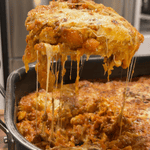
Fall Butternut Squash Lasagna
Fresh pasta layered with pork, veal, and beef ragù, roasted butternut squash béchamel, fontina, mozzarella, and Parmigiano.
Ingredients
For the squash and ragù
- 1 medium butternut squash about 2½–3 pounds, divided between the ragù and béchamel
- 1 –2 tablespoons olive oil as needed, plus a little for roasting
- 3 ounces thick-cut prosciutto diced, or pancetta or bacon
- 1 medium onion finely diced
- 2 carrots finely diced
- 2 celery stalks finely diced
- 3 garlic cloves thinly sliced
- 1½ pounds ground meat a mixture of pork, veal, and beef
- 2 tablespoons tomato paste
- ½ cup dry red wine
- Kosher salt and freshly ground black pepper to taste
- Freshly grated nutmeg to taste
- Tiny pinch Chinese five-spice powder optional
- ½ cup whole milk
- 1 can crushed tomatoes 28 ounces
- 3 –4 sage leaves and 4–5 thyme sprigs tied together with kitchen twine
For the fresh pasta
- 300 grams all-purpose flour plus more for dusting
- 2 large eggs
- 2 large egg yolks
- 2 –4 teaspoons water only as needed
For the roasted squash béchamel
- Roasted half of the butternut squash above
- 2½ cups whole milk divided, plus more as needed
- 3 tablespoons unsalted butter
- 3 tablespoons all-purpose flour
- Kosher salt to taste
- Freshly grated nutmeg to taste
- White or black pepper to taste
For assembly
- 8 ounces fontina grated
- 1 ball fresh mozzarella about 8 ounces, drained, patted dry, and cut into small pieces
- 1 cup grated Parmigiano
Instructions
- Roast and prepare the squash. Heat the oven to 425°F. Halve the squash lengthwise and remove the seeds. Lightly oil one half and place cut-side down on a baking sheet. Roast for 35–45 minutes, until completely tender. Peel the remaining half and cut into approximately ¼-inch cubes for the ragù.
- Cook the prosciutto and soffritto. Place the diced prosciutto in a large, heavy pot over medium heat, adding olive oil as needed. Cook until the fat softens and the edges begin to color. Add the onion, carrots, and celery. Cook gently for 10–12 minutes, stirring occasionally, until softened. Stir in the garlic and cook for 1 minute.
- Brown the meat. Add the ground meat, breaking it apart with a wooden spoon. Cook until the released liquid evaporates and the meat begins to brown. If the pot is crowded, brown the meat in batches and return it all to the pot before continuing.
- Build the ragù. Stir in the tomato paste and cook for 2 minutes, until slightly darkened. Add the wine, scraping up any browned bits, and cook until mostly reduced. Stir in the cubed squash, black pepper, a little nutmeg, the optional five-spice powder, and a small pinch of salt. Add the milk and let it gently reduce for a few minutes.
- Simmer the sauce. Add the crushed tomatoes and herb bundle. Bring to a gentle simmer, partially cover, and cook for 1½–2 hours, stirring occasionally, until the squash is tender and the ragù is rich and thick. Add small splashes of water if needed to prevent sticking, or simmer uncovered if the sauce is too loose. Remove the herbs and adjust the seasoning.
- Make the pasta dough. While the ragù simmers, mound the flour on a clean work surface and make a wide well in the center. Add the eggs and yolks. Beat with a fork, gradually incorporating the flour, then bring the dough together with your hands. Knead for 8–10 minutes, until smooth and supple. If it remains dry and crumbly, add water a teaspoon at a time. Wrap tightly and rest at room temperature for at least 30 minutes.
- Blend the roasted squash. Scoop the roasted squash flesh from its skin. Blend with ½ cup of the measured béchamel milk until completely smooth.
- Make the béchamel. Melt the butter in a saucepan over medium-low heat. Whisk in the flour and cook, stirring constantly, for 3–4 minutes, until light golden with a slightly nutty aroma. Gradually whisk in the remaining 2 cups milk. Bring to a gentle simmer and cook, stirring, until lightly thickened. Whisk in the squash purée. Season with salt, nutmeg, and white or black pepper. Loosen with additional milk as needed until creamy and easily spreadable.
- Roll the pasta. Heat the oven to 375°F. Divide the dough into manageable pieces, keeping unused portions covered. Roll with a pasta machine or rolling pin into very thin, even sheets, ideally thin enough to see the outline of your hand through them. If the dough springs back, cover and rest for another 10–15 minutes. Cut the sheets to fit the dish and brush off excess flour. Very thin sheets can be layered directly into the lasagna. Blanch thicker sheets in salted boiling water for approximately 30–60 seconds, then cool and lay flat on clean towels.
- Prepare the cheeses and assemble. Grate the fontina and Parmigiano. Drain and pat the mozzarella dry, then cut into small pieces. Spread a little ragù and béchamel over the bottom of the baking dish. Add pasta, ragù, béchamel, and a scattering of the three cheeses. Repeat to make approximately four filled layers, depending on the thickness of the pasta and depth of the dish. Keep the layers even and spread the sauces to the edges. Finish with pasta, béchamel, and the remaining cheeses, leaving about ½ inch below the rim.
- Bake until tender. Cover with foil, tenting it slightly so it doesn’t stick to the cheese. Bake for 30 minutes. Remove the foil, raise the oven temperature to 400°F, and bake for about 10 minutes more, until bubbling and hot in the center. A thin knife should slide through the pasta without resistance. If it needs longer, cover again and continue baking until tender.
- Brown and rest. Finish briefly under the broiler if needed for a golden top, watching closely. Let the lasagna rest for 20–30 minutes before slicing and serving.
