

Fresh pasta is a tradition for many, but not all. I was lucky enough to grow up around it early on, learning hands-on from my nonna and my zias in Italy. In my nonna’s hometown, pasta was made by feel. No one was pulling out scales or timers, you learned by touching the dough, kneading it, letting it rest, and understanding how it should move under your hands. That’s where my foundation came from, long before I had the language to explain what was actually happening.
Culinary school came later and gave me the structure. Ratios, technique, and the why behind each step, gluten development, resting, consistency. It helped me connect instinct with intention. Where I cook and teach now lives right in the middle of those two worlds, trusting your hands, but also knowing what you’re looking for.
There are many ways to make pasta, flour and water, flour and water with eggs, egg yolk–only doughs, and regional variations that change everything. This recipe is a standard, egg-based pasta dough, meant to be a reliable starting point. This post takes you from dough to sheeted pasta, start to finish. No shaping yet, no pressure to get it perfect. Just a solid foundation that makes everything else easier once you’re comfortable.
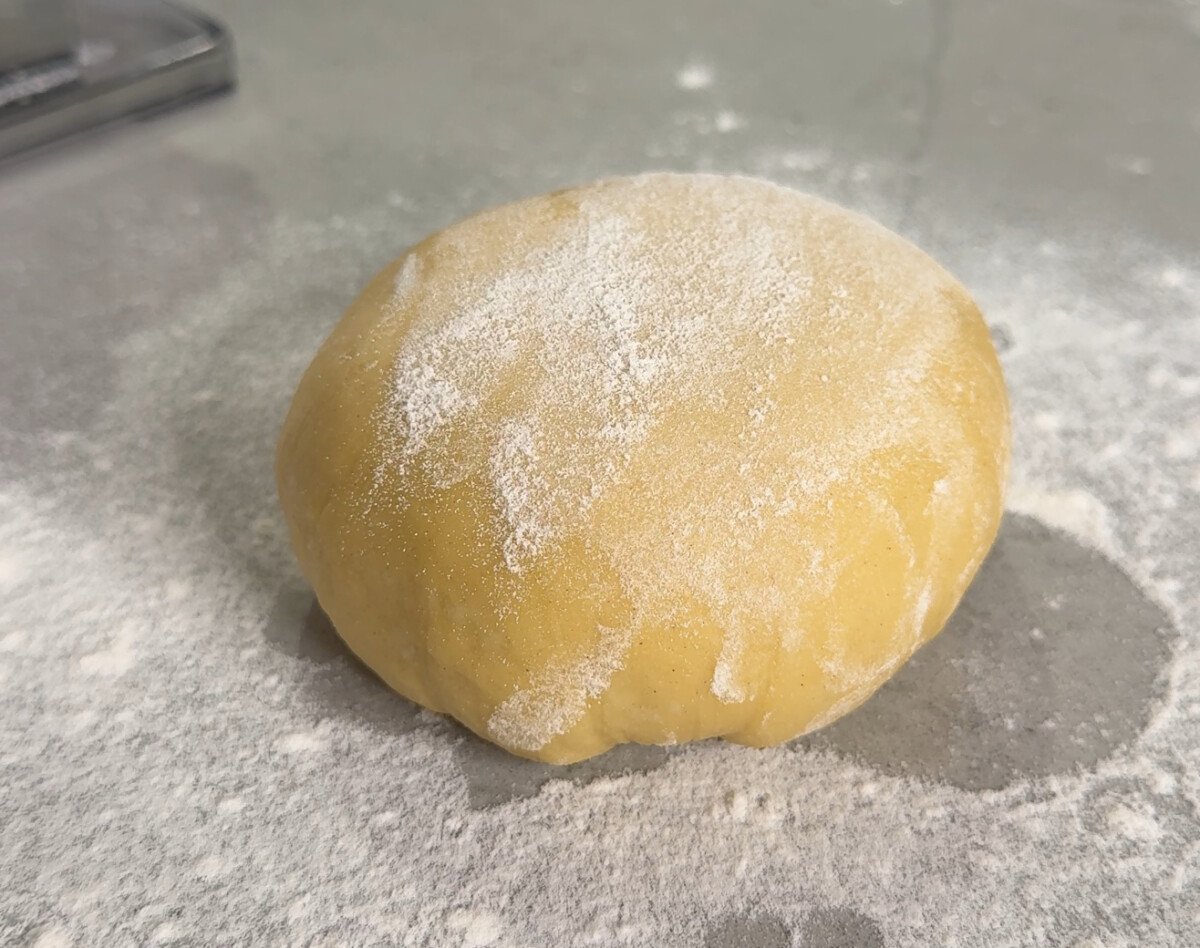
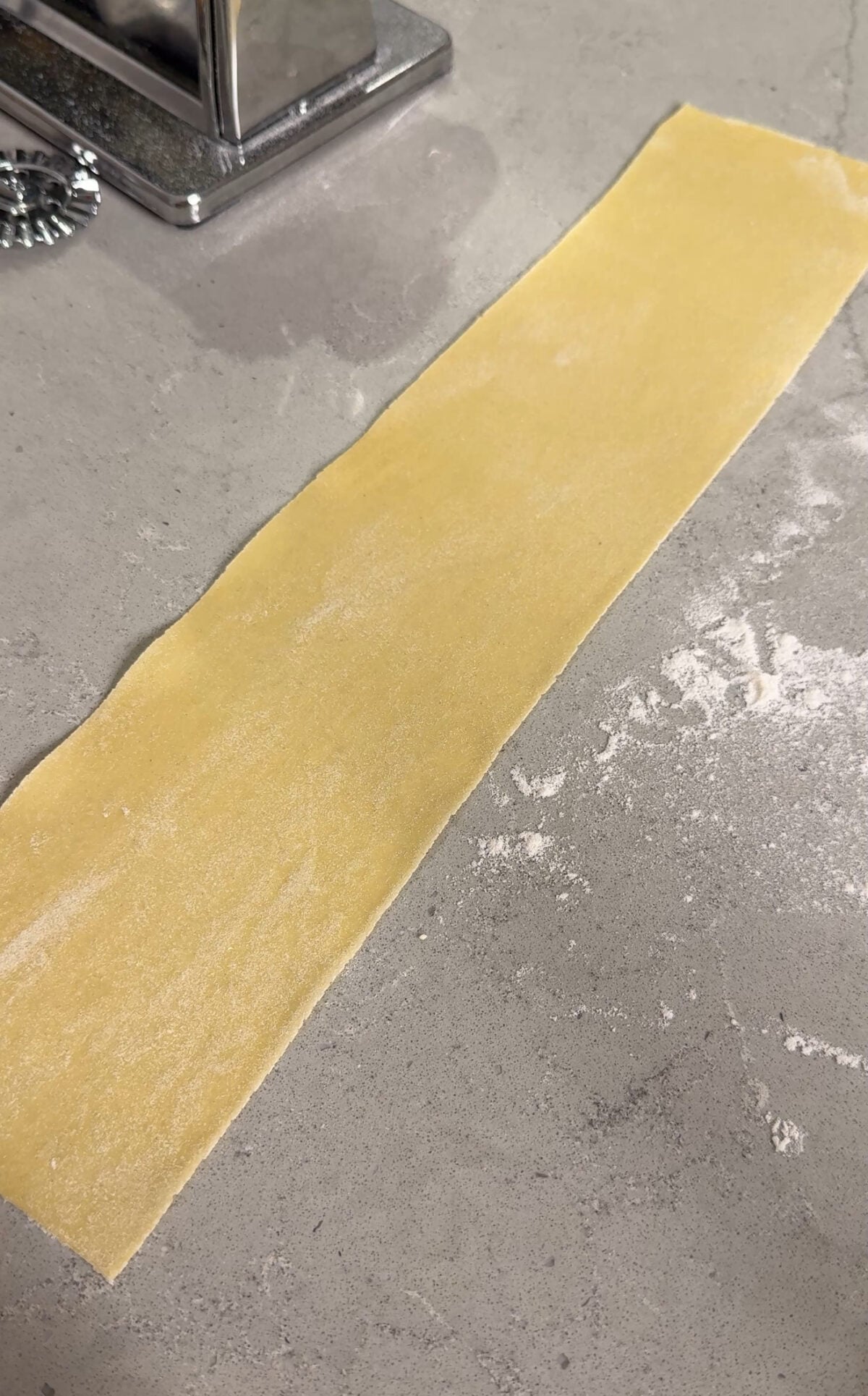
Table of Contents
❤️ Why You’ll Love Pasta Dough
- A true foundational recipe
This dough is the base for countless pasta shapes and techniques. - Built on feel and structure
It teaches you what the dough should look and feel like at every stage. - Rooted in tradition, clarified by technique
A method shaped by Italian home cooking and refined through culinary training. - Flexible and adaptable
Easy to scale, adjust, and evolve as you gain confidence.
🍲 Ingredients
- Tipo 00 flour – Ultra-fine Italian flour that creates a smoother, more elastic dough that rolls thin with ease. All-purpose flour can be used, but the dough will feel slightly firmer and less silky.
- Whole eggs – Provide structure, richness, and color, creating a balanced, versatile dough.
- Salt – Light seasoning to bring balance without overwhelming the dough.

👩🍳 How to Make Pasta Dough
- Form the flour well
Add the flour and salt to a clean work surface and shape it into a wide, sturdy well to hold the eggs. - Incorporate the eggs
Crack the eggs into the center and gently whisk with a fork, slowly pulling flour in from the sides until a shaggy dough forms. - Bring the dough together
Use a bench scraper if needed to gather everything into a rough mass, then switch to your hands once it holds. - Knead with intention
Push the dough forward with the heel of your hand, fold it back over itself, and repeat. Focus on texture, not time. The dough should become smooth, elastic, and gently spring back when pressed. - Rest the dough
Wrap tightly and let rest for at least 20 minutes. This allows the flour to fully hydrate and the gluten to relax, making rolling easier. - Divide and prepare to roll
Cut the rested dough into portions, keeping any unused pieces covered to prevent drying. - Sheet the pasta
Roll by hand or with a pasta machine, starting at the widest setting. Fold and re-sheet at the first setting to smooth and strengthen the dough, then gradually roll thinner until smooth, even, and strong. - Stop at the sheeted stage
Once thin and uniform with no tearing, the dough is ready to be cut, filled, or shaped.

🪄 Tips and Tricks
- Knead until the dough feels smooth and elastic, not tight.
- If the dough resists rolling, let it rest longer instead of forcing it.
- Always keep unused dough covered to prevent drying.
- Folding at the first sheeting setting improves strength and texture.
🗒 Substitutions
- All-purpose flour can replace 00 flour for a slightly firmer, more forgiving dough.
- For stuffed pasta, reduce the flour slightly to create a more tender sheet, about 90 g flour per egg instead of 100 g.
🧊 Leftovers
Wrap the dough tightly and refrigerate for up to 24 hours. Bring to room temperature before rolling. Sheeted pasta can be lightly floured, layered, and covered for short-term storage before shaping.
❓ FAQ
Yes. A rolling pin works well, just focus on even thickness rather than extreme thinness.
It needs more rest. Gluten relaxes with time, not force.
Yes. This recipe intentionally stops at sheeted pasta so it can be adapted to many shapes in separate recipes.
Pasta Dough

Ingredients
- 200 g Tipo 00 flour
- 2 whole eggs
- Pinch of salt
Instructions
- Form the flour and salt into a well on a clean work surface.
- Add the eggs and gradually incorporate the flour.
- Knead until smooth and elastic.
- Wrap and rest for at least 20 minutes.
- Roll into sheets by hand or with a pasta machine until smooth and even.
- If you want this adapted next into Stuffed Pasta Dough, Hand-Rolled Pasta, or turned into a Cooking 101 anchor post, just say the word.
Notes
For filled or stuffed pasta, slightly reduce the flour to about 180 g flour for 2 eggs to create a more tender, easier-to-seal dough.
Nutrition
Nutrition information is automatically calculated, so should only be used as an approximation.



Worked exactly as written!