

Braised short ribs are a dish I genuinely think every cook should know how to make. They’re rich, cozy, and impressive, but at their core, they’re built on very simple technique.
You’ll usually see two types of short ribs: English-cut and flanken-cut. English-cut are the thicker pieces with one bone per rib, my preference when I want that classic presentation and a sauce with more natural body from the bone. Flanken-cut are sliced thinner across the bone. They absolutely work, and I’ve made them when I’m more in a rush since they cook faster. Different look, same depth of flavor.
Traditionally they’re braised with red wine, something dry and full-bodied, but if you don’t use wine, all stock works beautifully too. A small splash of balsamic brings the acidity you’d normally get from wine. It’s less about strict rules and more about understanding balance and ratio.
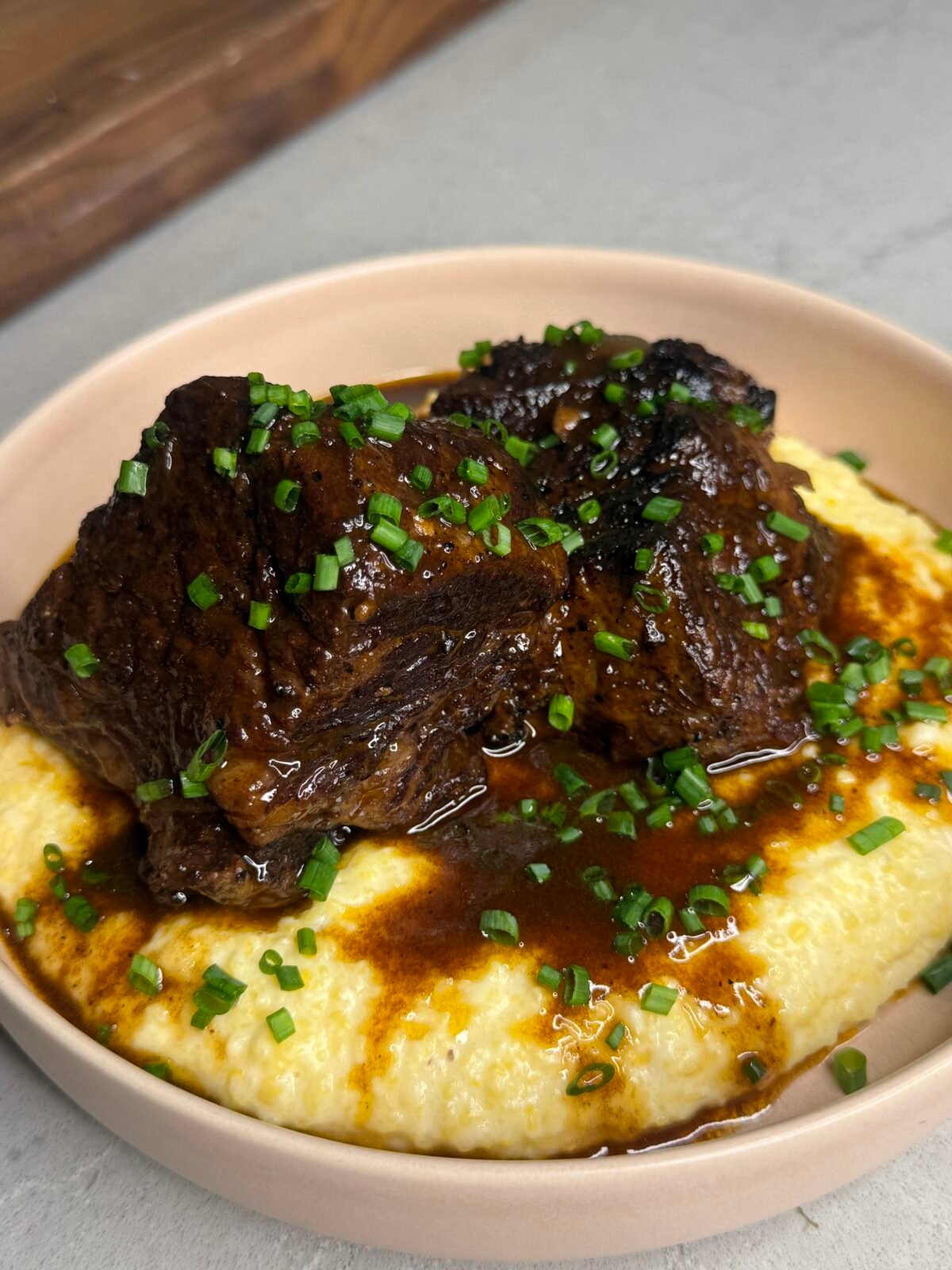
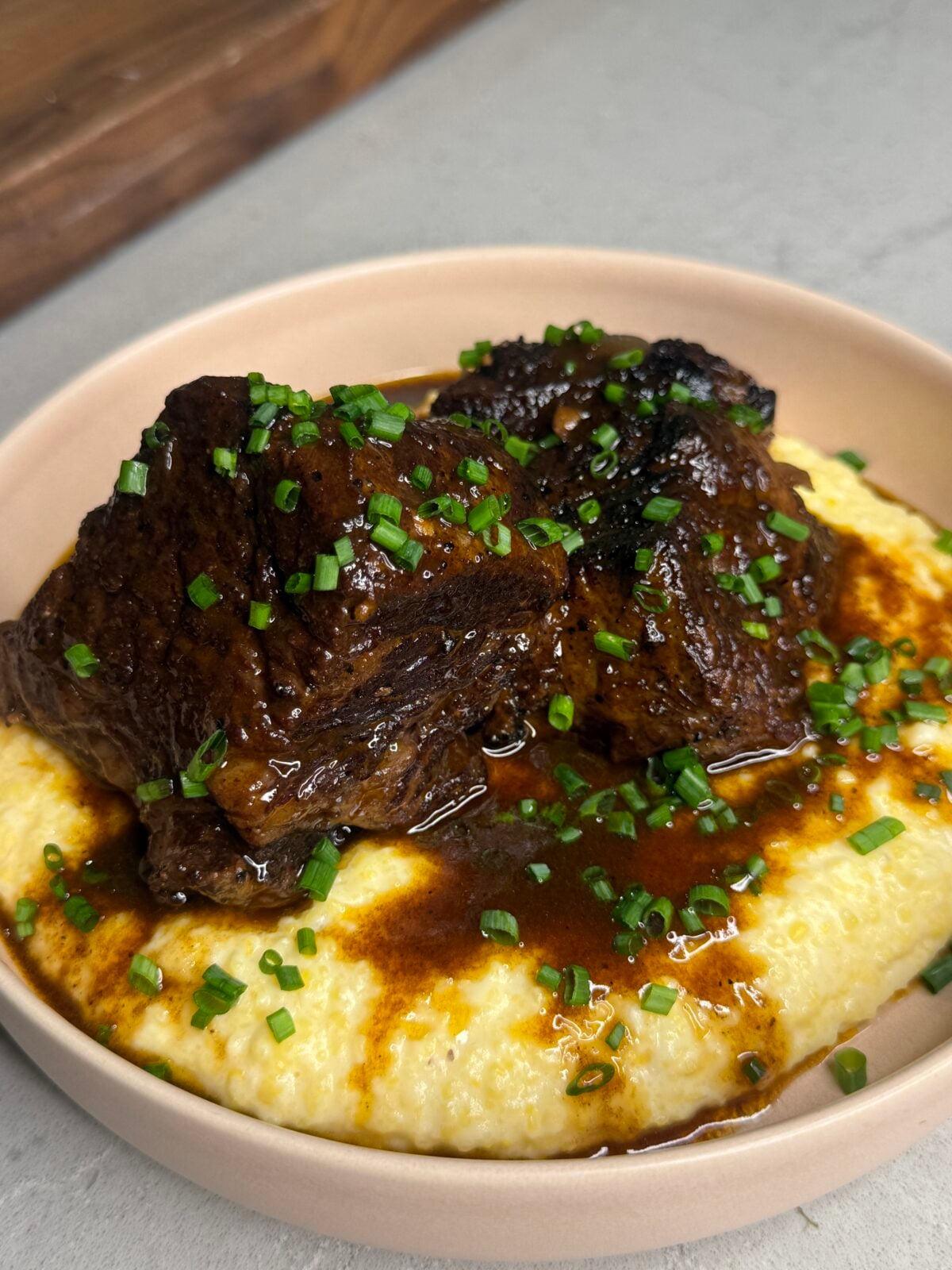
I love serving them over creamy polenta finished with Parmigiano, or over silky pommes purée. Either way, it’s the kind of dish that feels elevated and generous without being complicated. Once you make it, you realize it’s not about difficulty. It’s about patience and letting the ingredients do what they’re meant to do.
❤️ Why You’ll Love Red Wine Braised Short Ribs
- Built on technique, not complexity Proper searing, reduction, and liquid control do the heavy lifting.
- Deep, layered flavor Bone-in ribs and reduced wine create a sauce with natural body and richness.
- Cook by sight, not guesswork The liquid ratio is visual, not rigid, which builds real kitchen confidence.
- Even better the next day The flavors deepen and settle beautifully overnight.
🍲 Ingredients
Short Ribs
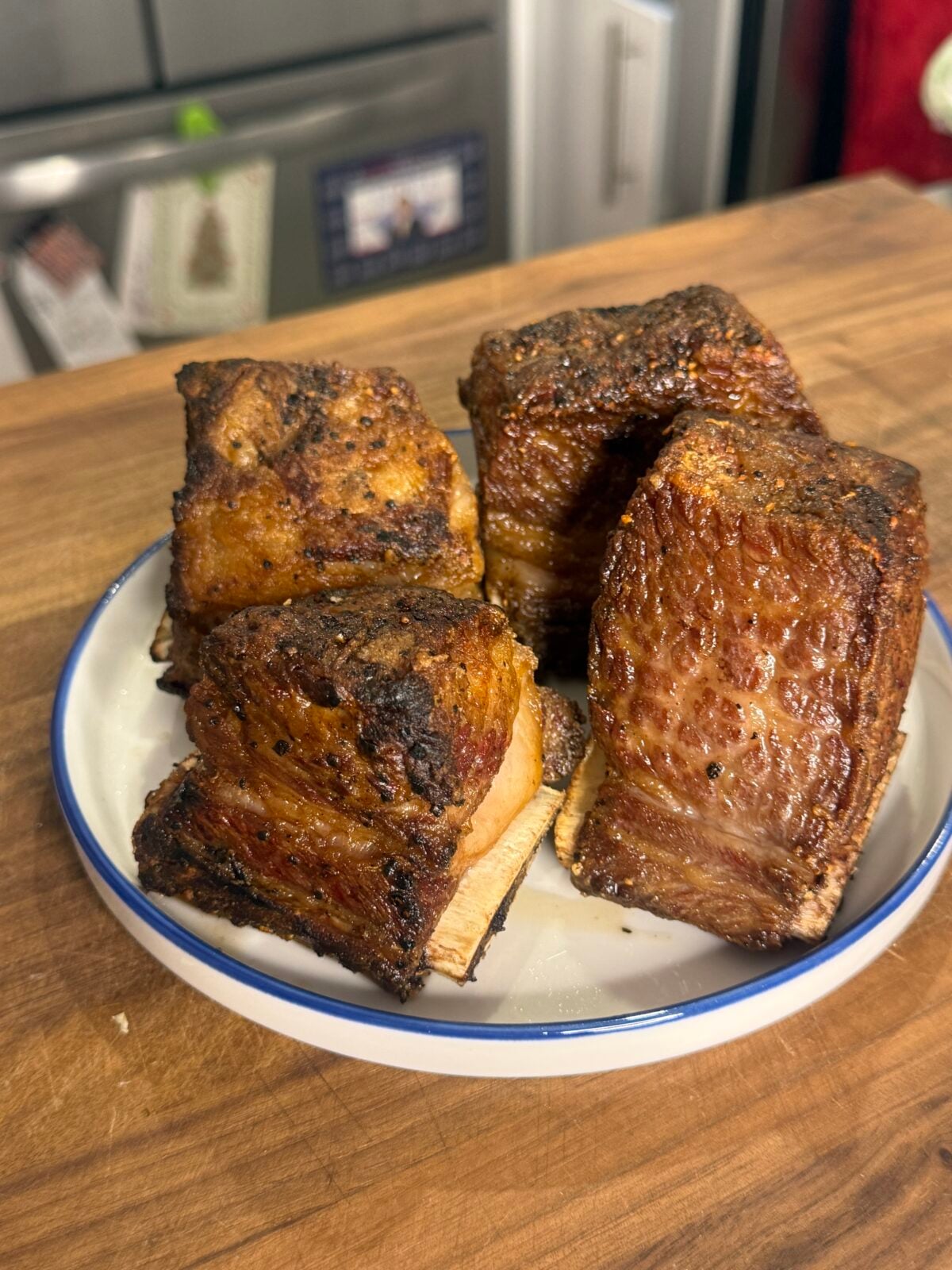
- Bone-in English-cut beef short ribs – Thicker cut with one bone per rib for better flavor and presentation.
- Kosher salt – Essential for seasoning deeply and building a proper crust.
- Freshly cracked black pepper – Adds warmth and balance.
- Neutral oil – For high-heat searing.
- Yellow onion – Forms the aromatic base of the braise.
- Carrots – Add sweetness and roundness.
- Celery – Brings savory depth.
- Garlic cloves – Provide aromatic backbone.
- Tomato paste – Concentrated umami and color.
- Dry red wine – Full-bodied and drinkable, something you’d actually pour in a glass.
- Low-sodium beef stock – Builds the braising liquid while keeping salt in check.
- Soy sauce – A small splash for savory depth.
- Bay leaves – Gentle herbal structure.
- Fresh thyme – Classic pairing with beef and wine.
- Fresh chives – Bright finish and contrast.
Parmigiano Polenta
- Polenta – Slowly cooked until tender and creamy.
- Water – Keeps texture balanced.
- Whole milk – Adds richness and silkiness.
- Kosher salt – Enhances the natural corn flavor.
- Unsalted butter – For gloss and softness.
- Freshly grated Parmigiano Reggiano – Nutty, salty depth that melts seamlessly into the polenta.
👩🍳 How to Make Red Wine Braised Short Ribs
- Season generously
Pat the ribs completely dry. Season heavily on all sides with kosher salt and freshly cracked black pepper. Proper seasoning is foundational here. - Sear for deep color
Heat a Dutch oven over medium-high with a thin layer of neutral oil. Sear the ribs undisturbed until deeply browned on all sides, about 3 to 4 minutes per side. Work in batches and never overcrowd. Remove and set aside. - Build the vegetable base
Lower heat to medium. Add onion, carrot, and celery with a small pinch of salt. Cook until softened and lightly golden, about 8 to 10 minutes. Add garlic and cook briefly. Stir in tomato paste and cook until darkened to a brick-red color and slightly sticky. - Deglaze and reduce
Add the red wine and scrape up all the fond from the bottom of the pot. Reduce by at least half until slightly syrupy and concentrated. If not using wine, skip this reduction and move forward with stock, adding a small splash of balsamic vinegar for balance. - Build the braise and check the ratio
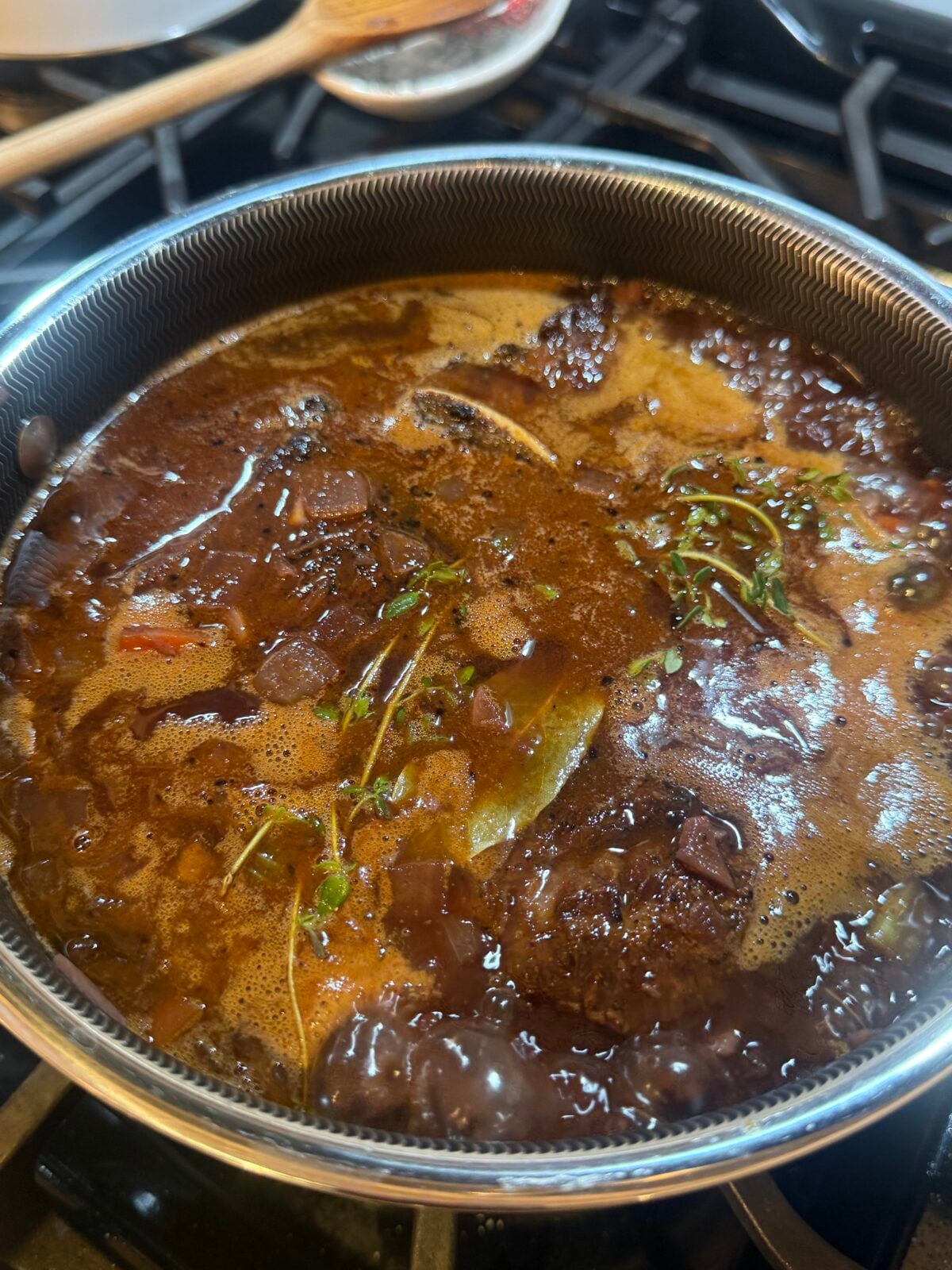
Stir in beef stock and soy sauce. Nestle the ribs back into the pot along with thyme and bay leaves. Visually check the liquid level. It should come about three-quarters of the way up the ribs, leaving the tops exposed. Not fully submerged, not barely touching. This ratio matters more than the exact number of cups. Add more stock only if needed to reach that level. - Braise low and slow
Bring to a gentle simmer, cover, and transfer to a 325°F oven. Braise for 2½ to 3 hours. The ribs are done when a knife slides into the thickest part with almost no resistance and the meat yields easily while still holding its shape. - Reduce the sauce, optional but elevated
For a rustic finish, serve directly from the braising liquid. For a more refined sauce, remove the ribs and strain the liquid, discarding solids. Skim excess fat and simmer uncovered for 15 to 25 minutes until glossy and lightly thickened. It should coat the back of a spoon, not resemble gravy. Whisk in a small knob of cold butter for extra gloss if desired. - Cook the Parmigiano polenta
Bring water, milk, and a generous pinch of salt to a boil. Slowly whisk in polenta. Reduce to low and cook, stirring frequently, until thick and tender, about 20 to 25 minutes. Stir in butter and Parmigiano. The texture should be loose and spoonable. If it tightens, loosen with warm milk or water. - Serve with intention
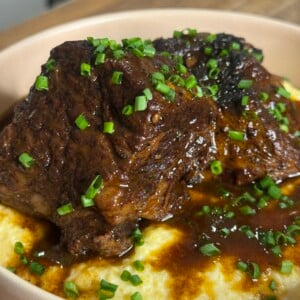
Spoon polenta into shallow bowls. Top with short ribs, spoon over the sauce, and finish with fresh chives.
🪄 Tips and Tricks
- Bone-in ribs create better sauce texture and deeper flavor.
- Heavily salting the meat helps build a proper crust and seasons the interior.
- Do not rush the sear, deep color equals deep flavor.
- Reduce the wine fully before adding stock.
- Polenta should be soft and flowing, never stiff.
My Pro Tip
Cook by eye, not just measurement
The liquid should rise about three-quarters up the ribs. Full submersion dilutes flavor, too little liquid risks drying out the braise.
🗒 Substitutions
- Flanken-cut short ribs can be used and will cook slightly faster.
- Boneless short ribs work, though the sauce will have slightly less body.
- Chuck roast cut into large pieces is an alternative with a slightly different texture.
- To make this without wine, replace the wine with additional stock and add a small splash of balsamic vinegar for acidity and balance.
🧊 Leftovers
Store ribs and sauce together in an airtight container for up to 4 days. The flavor deepens beautifully overnight.
Reheat gently on the stovetop over low heat, adding a splash of stock or water if needed.
Polenta will firm as it cools. Reheat with warm milk or water, whisking until smooth again.
This dish also freezes well for up to 2 months.
FAQ
English-cut are thick pieces with one bone per rib, ideal for braising. Flanken-cut are thinner slices across multiple bones and cook faster.
No. You can braise entirely in stock. Adding a small splash of balsamic will help mimic the acidity wine provides.
Partial submersion allows proper concentration and prevents the sauce from becoming diluted.
Yes. It’s excellent made earlier in the day or even the day before serving.
Red Wine Braised Short Ribs with Parmigiano Polenta
Ingredients
Short Ribs
- 4 pounds bone-in English-cut beef short ribs
- Kosher salt
- Freshly cracked black pepper
- Neutral oil
- 1 large yellow onion, diced
- 2 medium carrots, diced
- 4 celery stalks, diced
- 4 garlic cloves, smashed
- 2 tablespoons tomato paste
- 2 cups dry red wine
- 3 cups low-sodium beef stock, plus more if needed
- 2 –3 teaspoons soy sauce
- 2 bay leaves
- 4 –5 sprigs fresh thyme
- Fresh chives, finely sliced
Parmigiano Polenta
- 1 cup polenta
- 2 cups water
- 2 cups whole milk
- Kosher salt
- 2 tablespoons unsalted butter
- ¾ cup freshly grated Parmigiano Reggiano
Instructions
- Preheat oven to 325°F. Pat ribs dry and season heavily with kosher salt and freshly cracked black pepper.
- Heat oil in a Dutch oven and sear ribs on all sides until deeply browned. Remove and set aside.
- Cook onion, carrot, and celery until softened and lightly golden. Add garlic, then tomato paste and cook until darkened and slightly sticky.
- Add red wine and scrape up all fond from the bottom. Reduce by at least half until slightly syrupy. If not using wine, replace with additional stock and add a small splash of balsamic.
- Stir in beef stock and soy sauce. Return ribs along with thyme and bay leaves. The liquid should visually come about three-quarters of the way up the ribs, leaving the tops exposed. Add more stock only if needed to reach that level.
- Bring to a gentle simmer, cover, and braise 2½–3 hours until fork tender.
- Optional: strain and reduce sauce until glossy and lightly thickened. Finish with a small knob of butter if desired.
- Bring water and milk to a boil with salt. Whisk in polenta and cook 20–25 minutes, stirring frequently. Stir in butter and Parmigiano. Adjust consistency as needed.
- Serve ribs over polenta with sauce and fresh chives.
Nutrition
Nutrition information is automatically calculated, so should only be used as an approximation.



So yummy and easy!!