

I know octopus can be a controversial ingredient for some people, but in my Italian family it was always just part of the table, especially during the summer and at big gatherings. You’d find platters of seafood salad, grilled vegetables, cold wine, and octopus prepared a handful of different ways depending on the occasion.
One thing people get intimidated by is cooking it because if it’s done wrong it can turn out incredibly tough and chewy. But honestly, octopus is actually pretty simple once you understand the technique. You either cook it very quickly, or you cook it low and slow until it becomes ultra tender. Personally, I almost always prefer the longer simmer because it’s much more forgiving and gives you perfectly tender octopus every time.
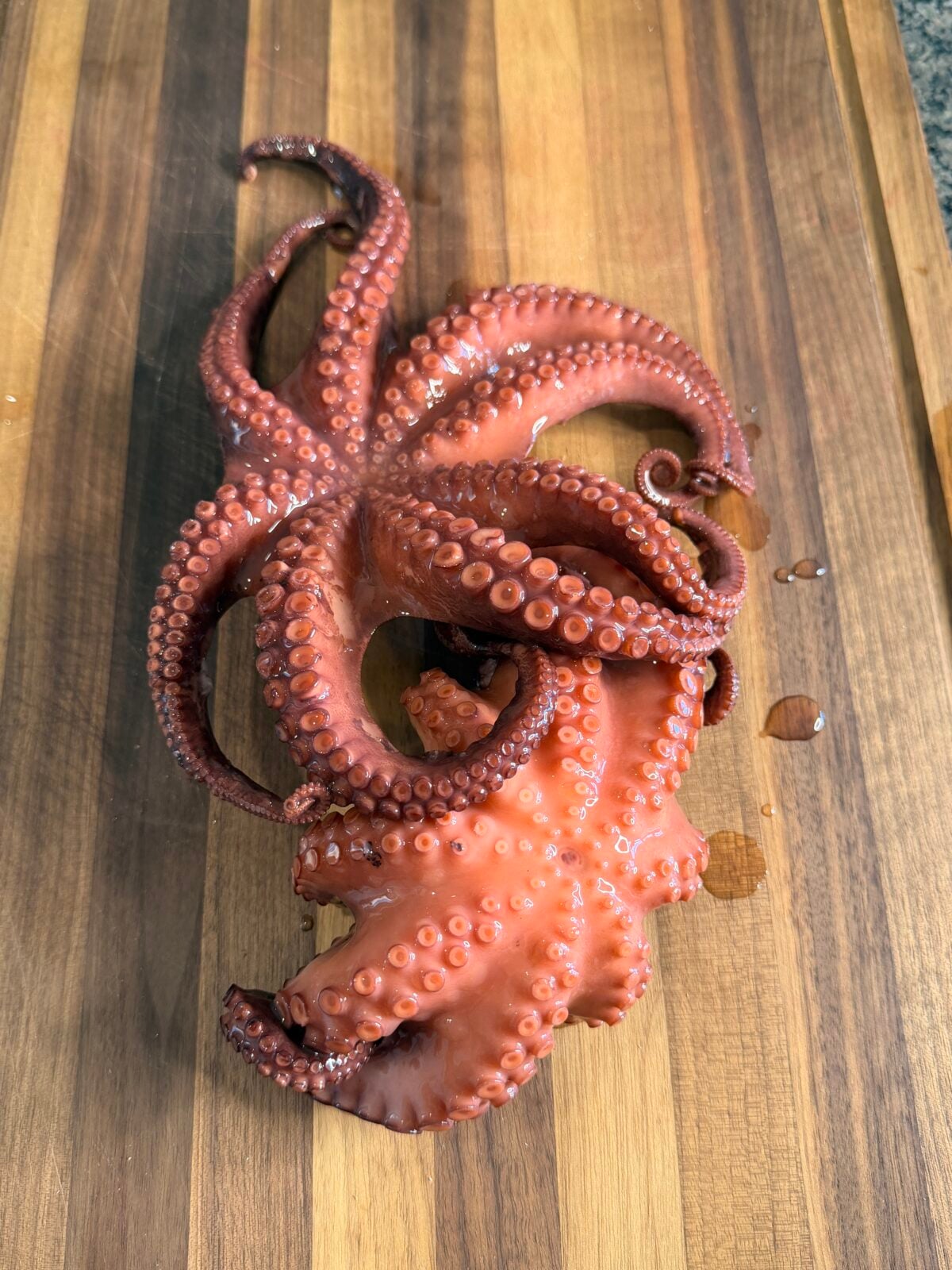
For prep, I like to remove the beak and trim the head just above the eyes because I think it cleans things up nicely, but that part is completely optional. From there, it’s really just a matter of gently simmering it until tender, then letting it cool in its own liquid so it stays juicy and flavorful.
Once it’s cooked, you can go in a few different directions. I love serving it chilled in a bright octopus salad with lemon, olive oil, celery, and herbs, but it’s also incredible thrown onto a hot grill or cast iron pan to get those crispy charred edges on the tentacles.
❤️ Why You’ll Love It
- Completely foolproof once you understand the low-and-slow technique that keeps the octopus tender instead of rubbery.
- Versatile and impressive because you can serve it chilled, grilled, seared, or added into pastas and seafood dishes.
- Minimal ingredients with most of the flavor coming from the octopus itself and a few simple aromatics.
- Perfect for entertaining since it can be cooked ahead and served cold or reheated later on the grill.
🍲 Ingredients
- Whole octopus , fresh or frozen and thawed
- Water , enough to fully cover the octopus
- Lemon or lemon peel
- Bay leaves
- Peppercorns
👩🍳 How to Make Octopus
- Clean the octopus. Remove the beak from the center underneath the tentacles. If desired, trim the head just above the eyes for a cleaner presentation.
- Add everything to the pot. Place the octopus in a large pot and add enough water to fully cover. Add the lemon, bay leaves, and peppercorns.
- Bring to a gentle simmer. Place the pot over medium heat and slowly bring the liquid up to a gentle simmer. Avoid aggressively boiling the octopus.
- Cook low and slow. Lower the heat, cover the pot, and let the octopus gently simmer for 45 minutes to 1 hour depending on size. Smaller octopus will cook faster while larger ones may take longer.
- Check for tenderness. Insert a knife into the thickest part of a tentacle. It should slide in easily with very little resistance.
- Cool in the liquid. Turn off the heat and allow the octopus to cool completely in its cooking liquid. This step keeps it juicy and tender.
- Serve. Slice and serve chilled in an octopus salad with lemon and olive oil, or grill or sear the tentacles in a hot cast iron pan until lightly charred and crispy around the edges.
🪄 Tips and Tricks
- A gentle simmer is the secret. Rapid boiling can make the texture tough.
- Letting the octopus cool in its liquid makes a huge difference in keeping it tender and juicy.
- Frozen octopus actually works beautifully because freezing naturally helps tenderize it.
- If grilling afterward, pat the octopus dry first so you get better browning and char.
🧊 Leftovers
Store leftover octopus in an airtight container in the refrigerator for up to 3 days. It’s delicious cold straight from the fridge, tossed into salads, folded into pasta, or reheated quickly in a hot pan or on the grill for crispy edges.
❓ FAQ
Yes. Grilling alone will not fully tenderize it. The simmering step is what creates that soft, tender texture first.
It was likely either undercooked or cooked too aggressively. A low, gentle simmer is key.
Absolutely. In fact, it’s even better made ahead since the octopus has time to fully cool and absorb flavor.
Yes, and many people actually prefer it because freezing helps naturally tenderize the meat.
How to Cook Octopus
Ingredients
- 1 whole octopus
- Water, enough to cover
- Lemon or lemon peel
- Bay leaves
- Peppercorns
Instructions
- Remove the beak from the octopus and trim the head above the eyes if desired.
- Place the octopus in a large pot and add enough water to fully cover.
- Add the lemon, bay leaves, and peppercorns.
- Bring the pot to a gentle simmer over medium heat.
- Lower the heat, cover, and cook for 45 minutes to 1 hour depending on the size of the octopus.
- Check for doneness by inserting a knife into the thickest part of the tentacle. It should slide in easily.
- Turn off the heat and let the octopus cool completely in the cooking liquid.
- Slice and serve chilled with lemon and olive oil, or grill or sear until lightly charred around the edges.





Thanks for this recipe!