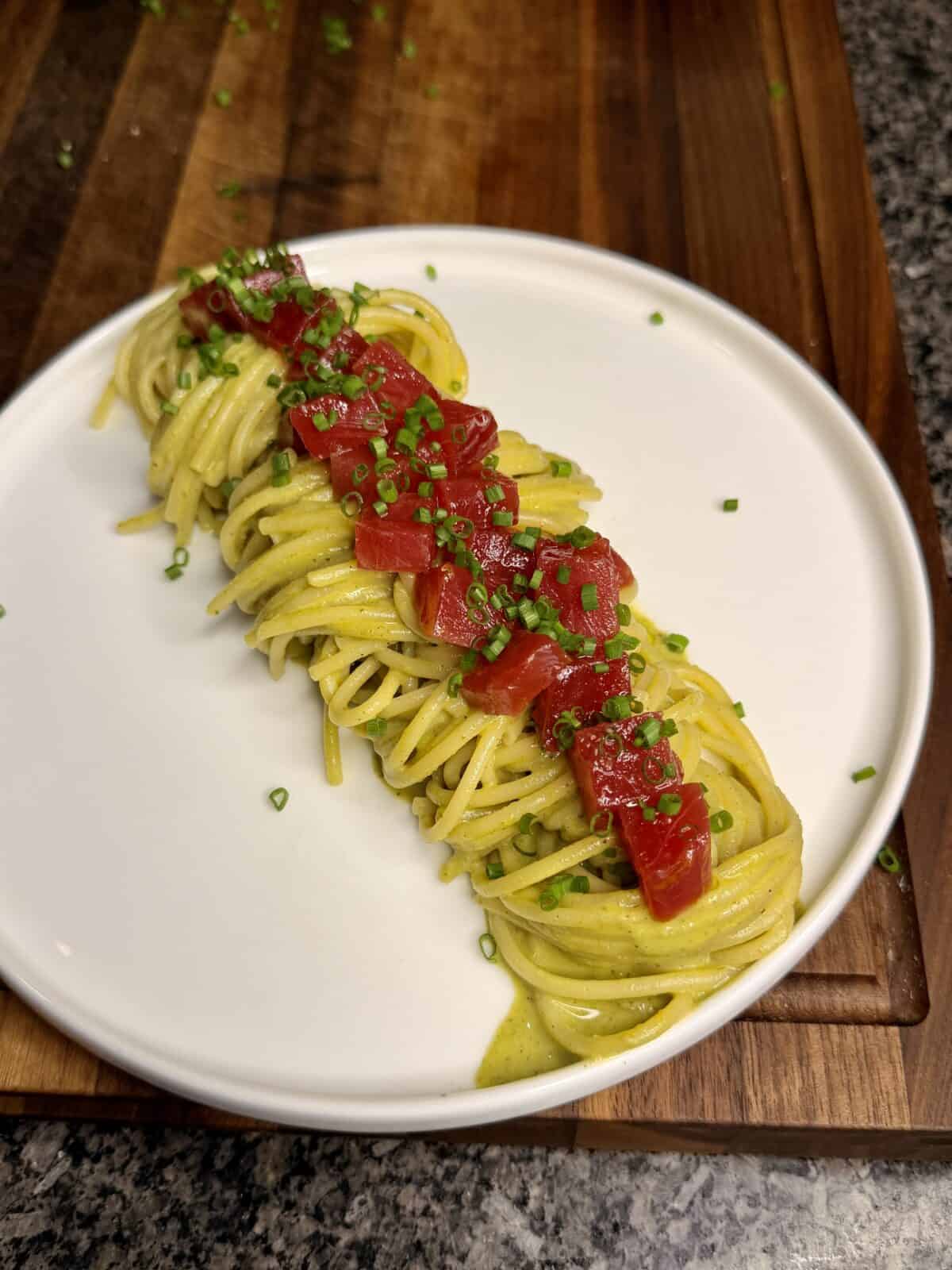
Pistachio Pesto Pasta with Tuna Tartare is creamy, nutty, bright, and fresh, with silky spaghetti underneath cool cubes of sushi-grade tuna seasoned with soy, ginger, lemon, and sesame oil. The contrast is what makes it so good, rich pistachio pesto, warm pasta, and that clean, delicate tuna on top.
Two of my favorite things in the world are sushi and pasta, so naturally, at some point, I was going to find a way to put them together. It might sound slightly sacrilegious, but I’ve actually seen versions of raw seafood and pasta paired together quite a few times in Italy, and whenever one appears on a menu, I pretty much have to order it.
For this version, I wanted the pesto to be distinctly pistachio-forward, with fresh basil and lemon keeping everything bright. And, in accordance with the famous Italian rule, there’s no cheese in this seafood pasta. Although, I might add, there are definitely a few exceptions to that rule.
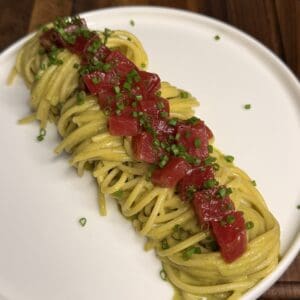
The final plating might be my favorite part. I form the spaghetti into a little horizontal nest and spoon the tuna across the top, almost like a piece of nigiri. Completely unnecessary, obviously, but very cute.
⏱️ 30 minutes total · 🍽️ 4 servings · 📊 Intermediate
Why You’ll Love Pistachio Pesto Pasta with Tuna Tartare
- An unexpected combination that actually works. The creamy, earthy pesto and fresh tuna balance each other instead of competing.
- Restaurant-worthy without being complicated. It looks impressive on the plate, but the entire dish comes together in about 30 minutes.
- The temperature contrast makes it special. Warm spaghetti and cool tuna tartare create a completely different eating experience from a traditional pesto pasta.
- Pistachio is the star. I blend the pesto completely smooth so it becomes rich and creamy while still tasting distinctly of roasted pistachio.
Ingredients
- Sushi-grade tuna: The fresh, clean centerpiece of the tartare. Look for tuna intended for raw preparation from a fishmonger or trusted market.
- Olive oil: Adds richness to both the tuna and the pistachio pesto.
- Soy sauce: Seasons the tuna and adds just enough savory depth.
- Sesame oil: A little goes a long way, adding a subtle toasted flavor to the tartare.
- Lemon zest: Brightens the tuna without overpowering its delicate flavor.
- Fresh ginger: Adds freshness and a gentle bite.
- Salt: Used to season both the tuna and pesto, as well as the pasta water.
- Roasted unsalted pistachios: The foundation of the pesto, giving it its nutty flavor and creamy texture.
- Fresh basil: Keeps the pistachio pesto vibrant and herbaceous.
- Garlic: Adds just enough sharpness to balance the richness of the nuts and olive oil.
- Lemon juice: Gives the pesto acidity and keeps the sauce tasting fresh.
- Spaghetti: My pasta of choice here because the long strands coat beautifully in the smooth pesto and make that nigiri-inspired plating possible.
- Fresh chives: A simple, fresh finish that works especially well with the tuna.
How to Make Pistachio Pesto Pasta with Tuna Tartare
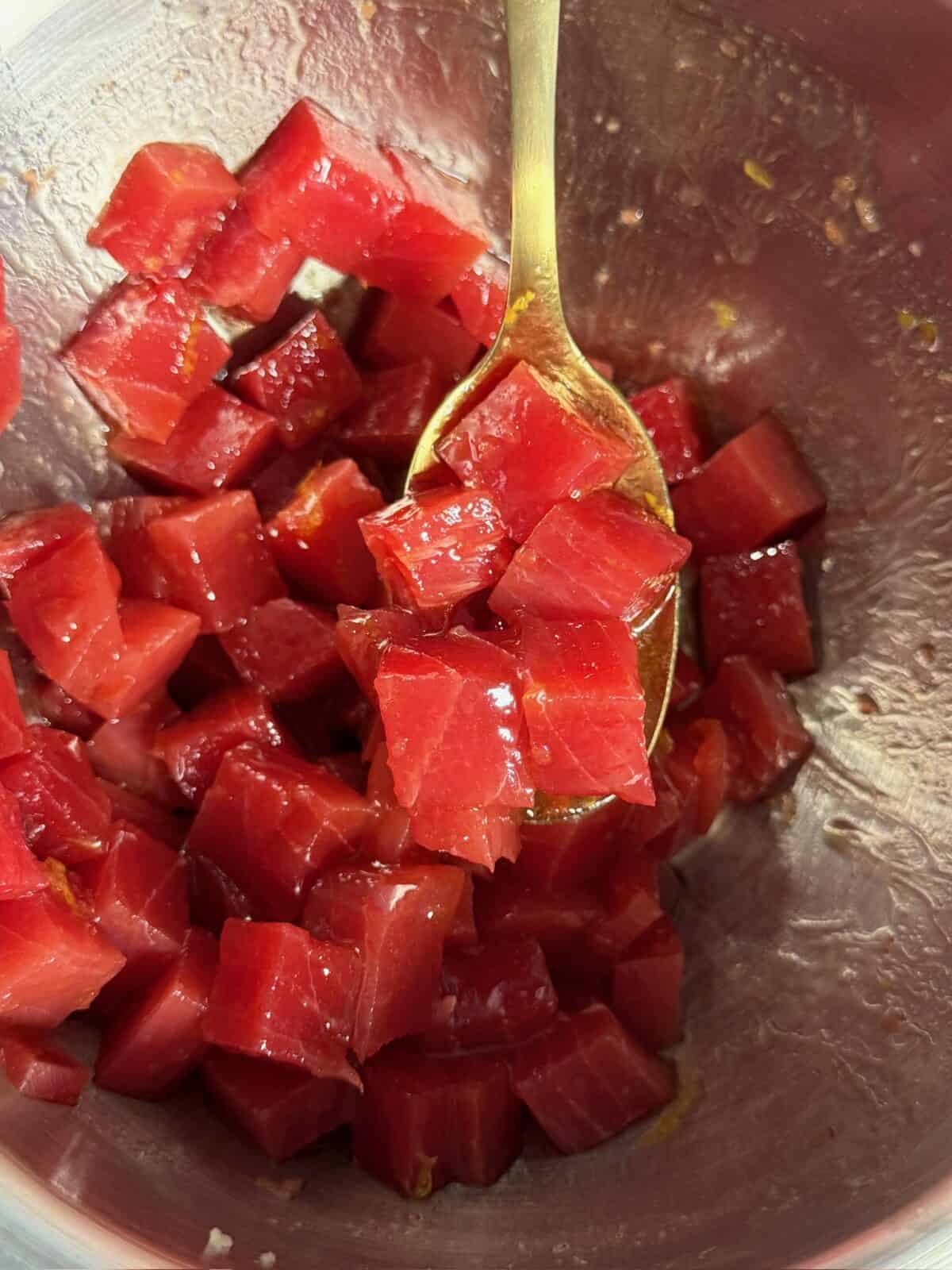
- Marinate the tuna. Cut the sushi-grade tuna into small, even cubes. Gently toss it with olive oil, soy sauce, sesame oil, lemon zest, grated ginger, and a small pinch of salt. Cover and refrigerate while you prepare everything else.
- Blend the pistachio pesto. Add the roasted pistachios, basil, garlic, lemon juice, olive oil, and salt to a food processor. Blend until completely smooth, stopping to scrape down the sides as necessary. I want this pesto creamy, not chunky.
- Cook the spaghetti. Bring a large pot of salted water to a rolling boil and cook the spaghetti until perfectly al dente. Before draining, reserve some of the pasta cooking water.
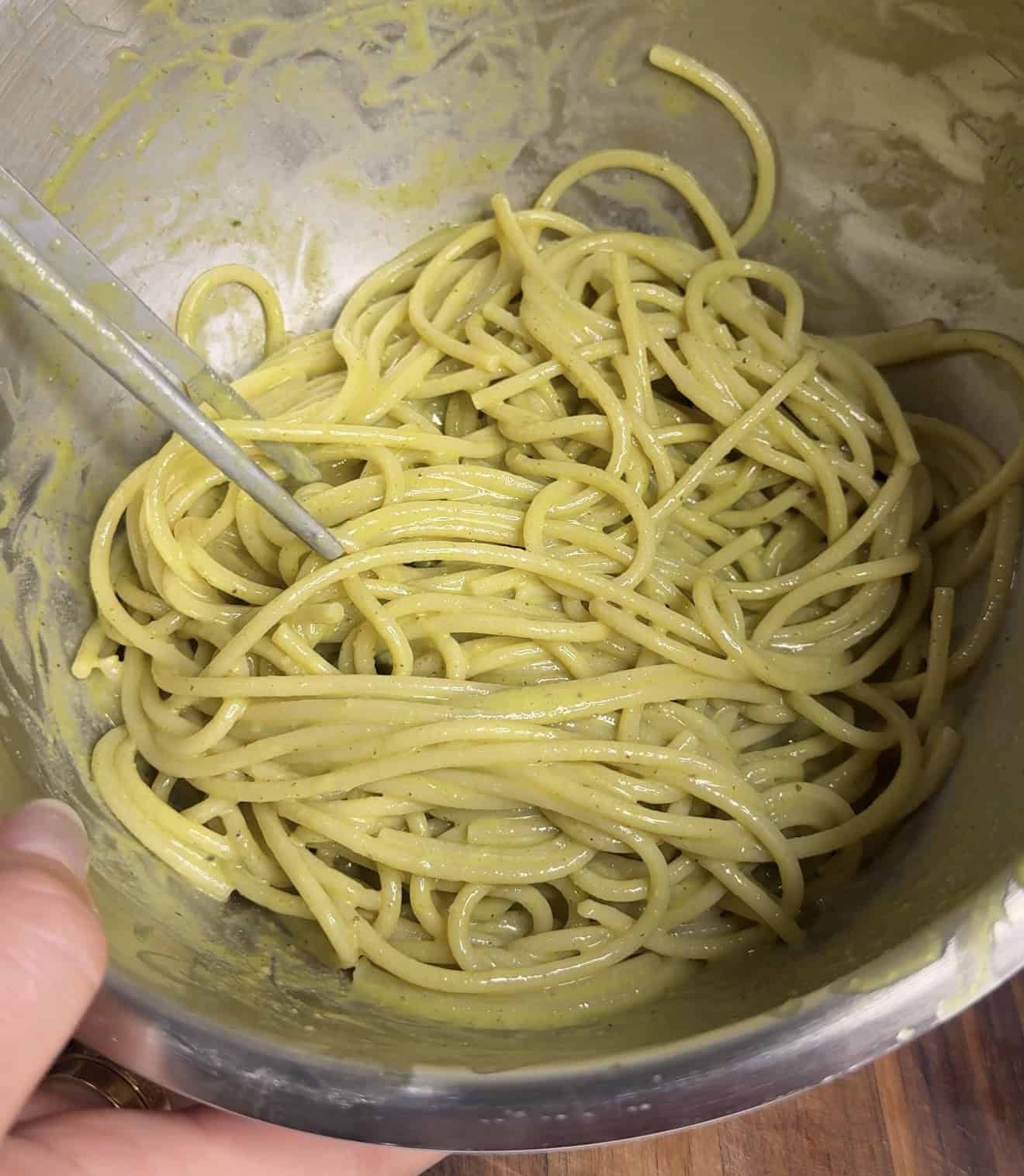
- Toss the pasta off the heat. Add the pistachio pesto to a large stainless steel mixing bowl, then add the hot drained spaghetti. Toss vigorously, adding a splash of pasta water as needed, until the pesto loosens and clings beautifully to every strand.
- Plate the pasta. You can plate it however you like, but I love twirling the spaghetti into a horizontal nest across the plate.
- Finish with tuna. Spoon the chilled tuna tartare generously over the spaghetti, almost like the topping on a piece of nigiri. Finish with fresh chives and serve immediately.
Tips and Tricks
- Toss the pesto off the heat. I intentionally use a mixing bowl instead of returning the pasta to a hot pan. Too much heat can dull the fresh basil flavor and color.
- Use pasta water strategically. Start with a small splash. You can always add more, but you want the pesto creamy enough to coat the spaghetti without becoming watery.
- Keep the tuna cold. Leave it refrigerated until the moment you plate the pasta. That contrast between cool tuna and warm spaghetti is part of what makes the dish work.
- Blend longer than you think. Pistachios need a little time to break down. Keep going until the pesto is genuinely smooth and creamy.
- Don’t over-season the tuna. The tuna should still taste like tuna. Soy, ginger, sesame, and lemon are there to enhance it, not turn it into a heavy marinade.
Substitutions
If you prefer another long pasta, linguine would be my first substitute for spaghetti.
You can use another high-quality raw fish that is appropriate for raw consumption, but I particularly love tuna here because its firm texture stands up beautifully against the creamy pesto.
If you cannot find fresh sushi-grade tuna, high-quality frozen tuna intended for raw preparation can actually be an excellent option. Because it is often flash-frozen quickly after being caught, frozen does not automatically mean lower quality.
Leftovers
This dish is definitely best eaten immediately. Once the tuna has been mixed with the marinade and served over the warm pasta, I would not recommend saving the fully assembled dish for later.
If you are prepping ahead, the pistachio pesto can be made in advance and refrigerated separately. Keep the tuna cold and whole, then dice and season it closer to serving. The pesto may thicken slightly in the refrigerator, so loosen it with pasta water when you assemble the dish.
FAQ
“Sushi-grade” is not a formally regulated term in the United States, so the most important thing is buying tuna specifically sold for raw consumption from a reputable source. I often find mine at a local Asian market.
Absolutely. In fact, frozen can be one of the best options. Tuna intended for raw consumption is often flash-frozen very quickly, which helps preserve its quality. Look for tuna specifically labeled or sold as suitable for raw preparation, then thaw it properly in the refrigerator.
Because seafood is involved, and we’re respecting the famous Italian no-cheese-with-fish rule here. Mostly. There are exceptions, and Italians will argue about them forever.
Yes. Make it ahead and store it covered in the refrigerator. Bring it closer to room temperature before tossing with the pasta, then use hot pasta water to bring back its smooth, creamy consistency.
Pistachio Pesto Pasta with Tuna Tartare
Ingredients
Tuna Tartare
- 12 ounces sushi-grade tuna, cut into small cubes
- 1 tablespoon olive oil
- 1 tablespoon soy sauce
- 1 teaspoon sesame oil
- 1 teaspoon lemon zest
- 1 teaspoon freshly grated ginger
- Small pinch of salt
Pistachio Pesto
- ½ cup roasted unsalted shelled pistachios
- ½ cup packed fresh basil leaves
- 1 garlic clove
- 1 tablespoon fresh lemon juice
- ½ cup olive oil
- Salt, to taste
Pasta
- 1 pound spaghetti
- Salt, for the pasta water
- Pasta cooking water, as needed
- Fresh chives, finely chopped, for finishing
Instructions
- Marinate the tuna. Add the cubed tuna to a mixing bowl with the olive oil, soy sauce, sesame oil, lemon zest, ginger, and a small pinch of salt. Gently toss to combine, cover, and refrigerate while you prepare the pesto and pasta.
- Make the pistachio pesto. Add the pistachios, basil, garlic, lemon juice, olive oil, and salt to a food processor. Blend until completely smooth, scraping down the sides as needed.
- Cook the spaghetti. Bring a large pot of generously salted water to a boil. Cook the spaghetti until al dente according to package directions. Reserve some pasta cooking water before draining.
- Toss with the pesto. Add the pistachio pesto to a large stainless steel mixing bowl. Add the hot spaghetti and toss vigorously, adding a splash of reserved pasta water at a time until the pesto becomes creamy and evenly coats the pasta.
- Plate. Twirl the spaghetti onto each plate. For the nigiri-inspired presentation, shape it into a horizontal nest.
- Finish and serve. Spoon the chilled tuna tartare over the pasta, finish with fresh chives, and serve immediately.