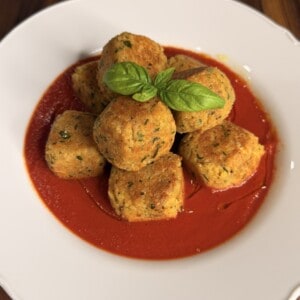
These Tuna Polpette al Sugo have a golden exterior, a tender center, and a little brightness from lemon zest and fresh parsley. I pan-fry them before gently finishing them in tomato sauce, so they hold their shape while soaking up some of that sugo.
This recipe is inspired by our neighbor in Italy, Antonietta, a.k.a. Tetta. This summer, while I was in my mom’s town in Basilicata, I spent so much time watching her cook. One of my biggest takeaways? That woman can turn practically anything into a polpetta. She made us several different versions, including tuna, and that one stayed with me.
For mine, I use Rio Mare tuna in olive oil, another one of Zia Antonietta’s favorites. I’m very thankful it’s finally available in the U.S., because my suitcase has carried enough cans home from Italy. With some bread, an egg, and a few things I almost always have in the kitchen, it becomes the kind of dinner that reminds me why I love Southern Italian home cooking.
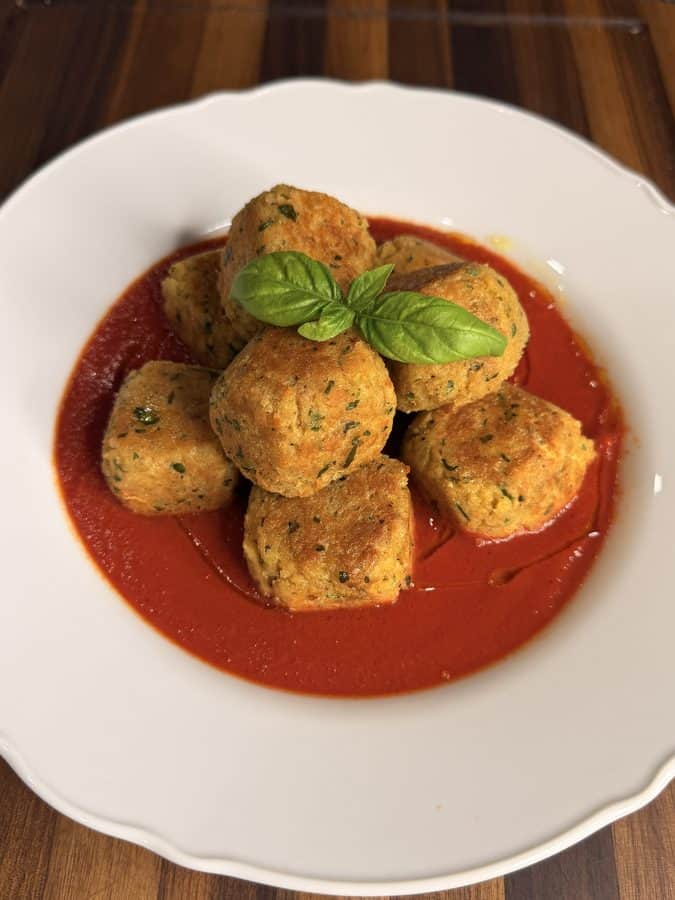
Why You’ll Love Tuna Polpette al Sugo
- A pantry ingredient becomes dinner. Canned tuna is the foundation of a meal that feels thoughtful and satisfying.
- Tender, with a golden crust. Fresh mollica softens the center while a quick pan-fry gives the outside some structure.
- Simple ingredients, plenty of flavor. Lemon, parsley, garlic, and Parmigiano bring the tuna to life.
- Good with or without the sugo. I love them in tomato sauce, but the golden polpette are delicious on their own, too.
Ingredients
For the Sugo
- Extra-virgin olive oil: The base for gently cooking the garlic.
- Garlic: Lightly smashed cloves flavor the sauce without overpowering the polpette.
- Passata: Smooth strained tomatoes make a simple sauce that coats the polpette beautifully.
- Kosher salt: Season to taste as the sauce simmers.
For the Polpette
- Tuna in olive oil: I use Rio Mare Yellowfin Tuna. Drain it, but leave a little oil clinging to the fish to keep the mixture moist.
- Fresh mollica: The soft interior of Italian bread, finely crumbled. It gives the polpette a tender texture without making them heavy.
- Egg: Binds the mixture. Start with one, then add a little extra beaten egg only if needed.
- Parmigiano: Finely grated so it distributes evenly throughout the mixture.
- Flat-leaf parsley: Adds freshness, with a little extra for finishing.
- Garlic: Finely grated so you don’t bite into pieces of raw garlic.
- Lemon zest: Brightens the tuna without adding extra liquid.
- Black pepper and kosher salt: Season lightly, since the tuna and Parmigiano already contribute salt.
- Extra-virgin olive oil: For pan-frying the polpette until golden.
How to Make Tuna Polpette al Sugo
- Start the sugo. Gently cook the smashed garlic in olive oil until fragrant and lightly golden. Add the passata and salt, then simmer over low heat for 15–20 minutes while you prepare the polpette.
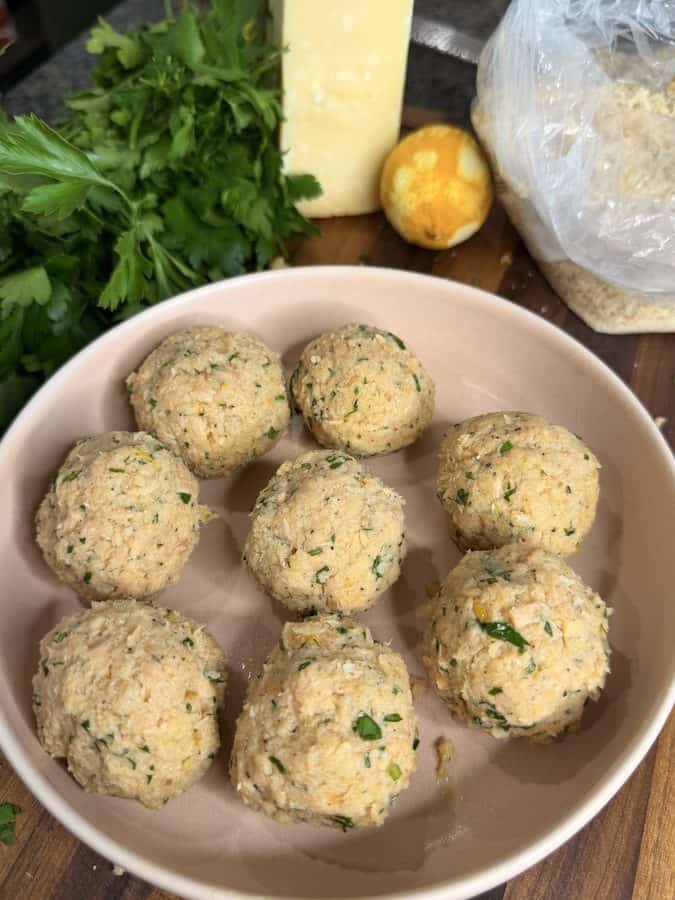
- Mix the polpette. Flake the drained tuna into a bowl, then add the mollica, one egg, Parmigiano, parsley, grated garlic, lemon zest, black pepper, and a small pinch of salt. Mix gently with your hands until combined.
- Check the texture. Press a little mixture firmly in your palm. It should feel soft and moist but hold together. If it falls apart, add a little additional beaten egg at a time, stopping as soon as it binds.
- Shape and chill as needed. Form 10–12 small polpette, gently compacting each one between your palms. If they feel especially soft, refrigerate for 15–20 minutes before frying.
- Pan-fry until golden. Heat a thin layer of olive oil in a skillet over medium heat. Add the polpette and let a golden crust form before turning them carefully. Cook until browned all over, about 5–6 minutes total.
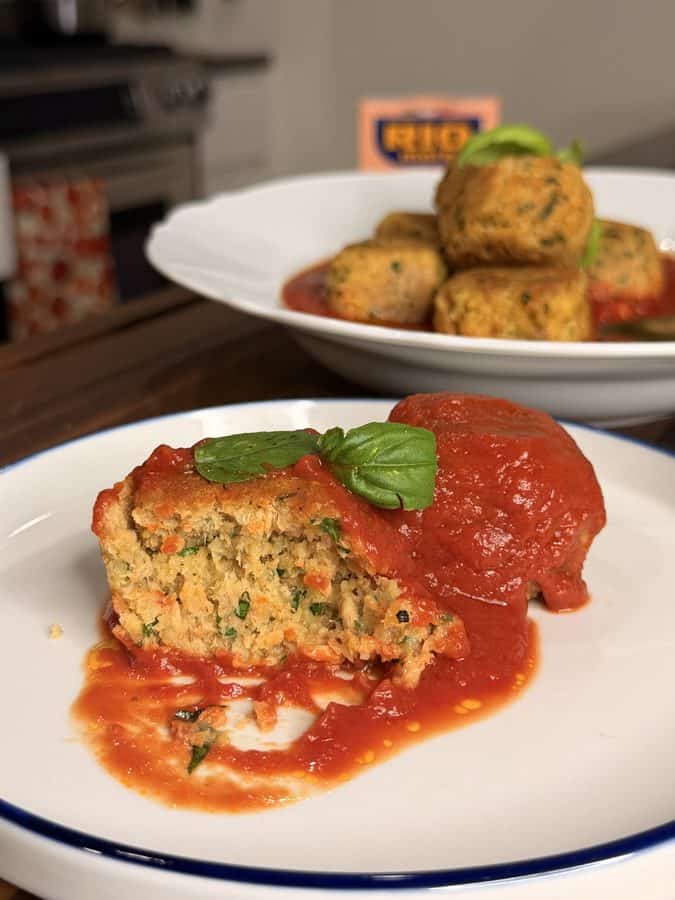
- Finish in the sauce. Transfer the browned polpette to the gently simmering sugo. Spoon sauce over the tops and cook for another 5–7 minutes, until hot through and set in the center. Finish with parsley and serve with crusty bread for scarpetta.
Tips and Tricks
- Test one before cooking the batch. If you’re unsure about the texture, fry one polpetta first. It’s the easiest way to check that the mixture holds together before filling the pan.
- Let the crust form. Moving the polpette too early can make them break. Give the first side time to brown, then turn gently with a spoon or small spatula.
- Keep the sauce at a gentle simmer. Spoon it over the polpette instead of stirring vigorously, especially right after adding them.
Substitutions
- Dried breadcrumbs: Use ⅓ cup plain dried breadcrumbs in place of the fresh mollica. Let the mixed ingredients rest for 5 minutes so the crumbs can hydrate. If dry, add water a little at a time, up to 1–2 tablespoons, before checking whether additional egg is needed.
- Prepared tomato sauce: Your favorite jarred tomato sauce works well here. Warm it in a wide pan while you prepare the polpette.
- Another tuna in olive oil: Choose a tuna you enjoy eating on its own, since its flavor is central to the dish.
Leftovers
Refrigerate the cooked polpette with their sauce in an airtight container for up to 3 days. Reheat gently in a covered skillet over medium-low heat, adding a splash of water if the sauce has thickened.
The golden crust softens once the polpette sit in the sauce, but the centers stay tender. Handle them gently when reheating.
FAQ
Mollica is the soft interior of bread, without the crust. Here, I crumble it finely and mix it directly into the tuna. Use soft bread, or pulse slightly stale bread into fresh crumbs before measuring.
The mixture may need more binding, or the polpette may have been turned before a crust formed. Press a little mixture in your palm before shaping. If it crumbles, add beaten egg a little at a time. If it holds together but feels very soft, chill the shaped polpette before frying.
Yes. Shape the polpette, cover, and refrigerate for up to a day before cooking. The sauce can also be made ahead and reheated when you’re ready to finish the dish.
Absolutely. Pan-fry them until golden and cooked through, allowing a little extra time as needed since they won’t finish in the sugo. I’d serve them with lemon wedges and a simple salad.
Tuna Polpette al Sugo
Ingredients
For the sugo
- 2 tablespoons extra-virgin olive oil
- 2 garlic cloves, lightly smashed
- 1 bottle passata, 24 ounces
- fresh basil
- Kosher salt, to taste
For the polpette
- 2 cans Rio Mare Yellowfin Tuna in Olive Oil, 4.2 ounces each, drained
- 1 cup fresh mollica, the soft interior of Italian bread, finely crumbled
- 1 large egg, plus up to 1 additional beaten egg as needed
- 2 tablespoons finely grated Parmigiano
- 2 tablespoons finely chopped flat-leaf parsley, plus more for serving
- 1 small garlic clove, finely grated
- Zest of ½ lemon, plus more for finishing if desired
- Freshly ground black pepper
- Kosher salt, as needed
- Extra-virgin olive oil, for pan-frying
- Crusty bread, for serving
Instructions
- Make the sugo. Heat the olive oil in a wide skillet or shallow saucepan over medium-low heat. Add the smashed garlic and cook gently for 1–2 minutes, until fragrant and lightly golden. Add the passata, season with salt, add the basil and bring to a gentle simmer. Reduce the heat to low and cook for 15–20 minutes while you prepare the polpette.
- Combine the polpette ingredients. Add the drained tuna to a large bowl and gently break it into flakes with a fork. Add the mollica, one egg, Parmigiano, parsley, grated garlic, lemon zest, black pepper, and a small pinch of salt. Mix gently with your hands until combined.
- Adjust the binding. Firmly press a little mixture in your palm. It should feel soft and moist but hold its shape. If it crumbles, beat a second egg separately and add it a little at a time, mixing gently until the mixture binds. You may not need the entire second egg.
- Shape the polpette. Form about 10–12 small polpette, roughly 1½ inches across, compacting them gently between your palms. If they feel especially soft, refrigerate for 15–20 minutes before cooking.
- Brown the polpette. Heat enough olive oil to lightly coat the bottom of a separate skillet over medium heat. Add the polpette, working in batches if necessary. Let the first side develop a golden crust before turning, then continue cooking carefully until golden all over, about 5–6 minutes total.
- Finish in the sugo. Transfer the browned polpette into the gently simmering tomato sauce. Spoon a little sauce over the tops and cook for another 5–7 minutes, until hot through and set in the center. Avoid vigorous stirring.
- Finish and serve. Scatter with chopped parsley and a little extra lemon zest, if desired. Serve warm with plenty of sauce and crusty bread for scarpetta.