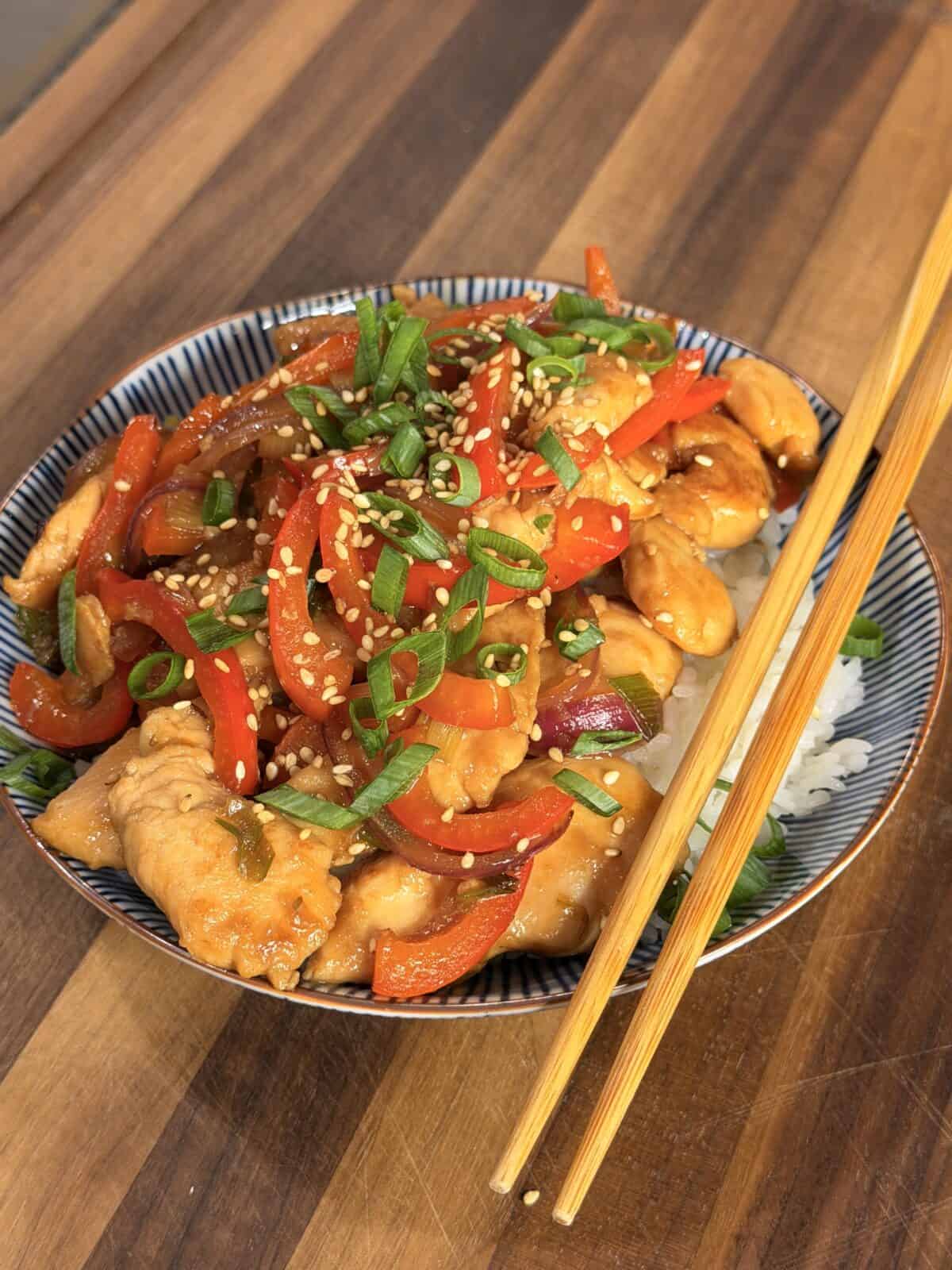
Tender turkey, colorful peppers, and onions tossed in a glossy sesame-ginger sauce, served over fluffy white rice. A quick weeknight dinner with the sweet, savory flavors I love in takeout.
Sesame-Ginger Turkey Stir-Fry brings together thin slices of turkey, crisp peppers, and a glossy sauce with fresh ginger, garlic, and toasted sesame oil. The sauce coats everything beautifully, with just enough sweetness from honey to balance the soy sauce and rice vinegar.
I’m using turkey breast tenderloins here, which are great for more than roasting or turning into cutlets. Sliced thinly, they cook quickly and work really well in a stir-fry. You could also make this with chicken, beef, or shrimp, so it’s a useful recipe to keep in your weeknight rotation.
The way I make this is simple: start the rice, toss the turkey with its quick marinade, then chop the vegetables and whisk together the sauce. I’m not leaving the meat to marinate for hours. It gets a few minutes while I finish prepping, and then everything is ready to hit the pan.
Total: 35 minutes · Yield: 4 servings · Level: Easy
Why You’ll Love Sesame-Ginger Turkey Stir-Fry
- A practical weeknight dinner. Start the rice first, then use that cooking time to prepare the turkey, vegetables, and sauce.
- A short marinade. The turkey only needs to sit while you finish your prep, with no lengthy marinating time to plan around.
- Tender turkey and crisp vegetables. Cooking them separately gives each the attention it needs before everything comes together.
- Easy protein swaps. The same flavors work with chicken, beef, or shrimp, with a few adjustments to cooking time.
Ingredients
For the turkey
- Butterball Turkey Breast Tenderloins: Slice thinly against the grain so the pieces cook quickly and are easy to bite through.
- Cornstarch: Forms a light coating that helps protect the turkey during cooking.
- Soy sauce: Seasons the turkey before it goes into the pan.
- Water: Helps distribute the marinade evenly.
- Neutral oil: Helps coat and separate the turkey slices.
For the sauce
- Soy sauce: The savory base of the sauce. Use reduced-sodium soy sauce if you prefer more control over the saltiness.
- Water: Balances the sauce and gives it enough liquid to coat the turkey and vegetables.
- Honey: Adds sweetness and helps create that glossy finish.
- Rice vinegar: Brings acidity to balance the honey and soy.
- Toasted sesame oil: Adds a nutty flavor. It goes into the sauce rather than being used as the frying oil.
- Cornstarch: Thickens the sauce once it comes to a simmer.
For the stir-fry and serving
- Neutral oil: Use a high-heat oil, such as canola or vegetable oil.
- Bell peppers: Red and yellow or orange peppers bring sweetness, color, and crunch.
- Yellow onion: Slice thinly so it cooks alongside the peppers.
- Garlic and fresh ginger: Add toward the end of cooking the vegetables so they become fragrant without burning.
- Scallions: Cook the whites with the aromatics and save the greens for finishing.
- Cooked white rice: Start it before the rest of your prep so it’s ready for serving.
- Sesame seeds: Finish with a sprinkle for a little texture and extra sesame flavor.
How to Make Sesame-Ginger Turkey Stir-Fry
- Start the rice and slice the turkey. Get your rice cooking according to the package directions. Slice the turkey against the grain into thin, evenly sized, bite-sized strips.
- Give the turkey a quick marinade. Toss the turkey with cornstarch, soy sauce, water, and neutral oil until evenly coated. Let it sit in the refrigerator while you prepare the remaining ingredients, about 10 minutes.
- Prep the vegetables and sauce. Slice the peppers and onion, prepare the garlic and ginger, and separate the scallion whites from the greens. Whisk together all the sauce ingredients. Have everything ready before you start cooking.
- Sear the turkey. Heat neutral oil in a large skillet or wok over medium-high heat. Add the turkey in a single layer, working in batches as needed, and sear for about 2–3 minutes per side. Transfer to a plate, then continue directly with the vegetables. The turkey will finish cooking in the sauce.
- Stir-fry the vegetables. Add the remaining oil, followed by the peppers and onion. Cook for 3–4 minutes, stirring frequently, until slightly softened but still crisp. Add the garlic, ginger, and scallion whites and stir for about 30 seconds, until fragrant.
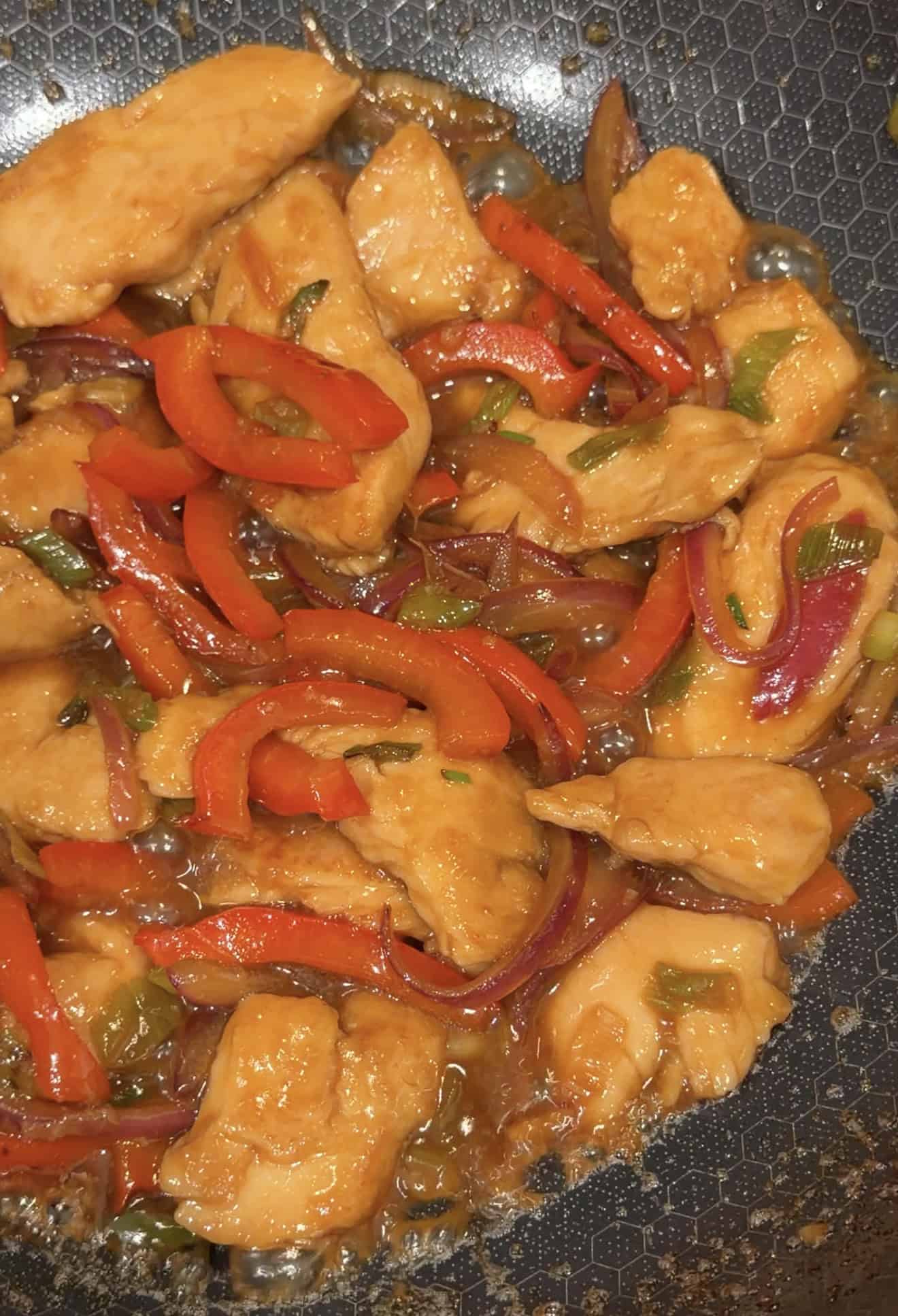
- Bring everything together. Return the turkey and any accumulated juices to the pan. Whisk the sauce again, pour it in, and toss. Cook for another 1–2 minutes, or until the sauce is glossy and thickened and the turkey reaches an internal temperature of 165°F.
- Finish and serve. Spoon over white rice and finish with the scallion greens and sesame seeds.
Tips and Tricks
- Prep first, cook second. Once the turkey hits the pan, things move quickly. I get all the chopping and sauce mixing out of the way before turning on the heat.
- Slice evenly and against the grain. Shortening the muscle fibers helps the turkey eat more tenderly, and consistent thickness keeps the pieces cooking at a similar rate.
- Keep the marinade brief. This light cornstarch coating is a simple approach to velveting. You don’t need a long soak, just the time it takes to prepare the rest of dinner.
- Avoid crowding the pan. Give the turkey enough space to sear. A crowded pan traps moisture and encourages steaming.
- Whisk the sauce again before adding. Cornstarch settles as it sits, so a quick whisk redistributes it.
- Adjust the consistency at the end. If the sauce becomes too thick, add a splash of water and toss until it lightly coats everything.
Substitutions
- Chicken: Use thinly sliced boneless, skinless chicken breast or thighs. Follow the same marinade and method, cooking to an internal temperature of 165°F.
- Beef: Thinly sliced flank steak or sirloin works well. Slice against the grain, use the same quick marinade, and sear briefly in batches. Adjust the cooking time for the cut and thickness.
- Shrimp: Use peeled, deveined shrimp. Give them the same brief marinade, sear just until nearly cooked, then return them at the end to finish in the sauce. They cook faster than turkey, so watch closely.
- Vegetables: Broccoli, snap peas, or thinly sliced carrots can replace some of the peppers. Adjust the cooking time so firmer vegetables become crisp-tender before adding the sauce.
- Honey: Substitute brown sugar, whisking until it dissolves into the sauce.
Storing and Reheating
Refrigerate the stir-fry in an airtight container for up to 3–4 days. Store the rice separately when possible, and refrigerate both promptly after the meal.
Reheat the stir-fry in a skillet over medium heat with a splash of water to loosen the sauce, stirring until heated through to 165°F. You can also microwave it in short intervals, stirring between each.
The vegetables will soften as they sit, and the sauce will thicken in the refrigerator. A little water helps restore the sauce, but the peppers will have the most crunch when freshly cooked.
FAQ
No. I let it sit for about 10 minutes while I chop the vegetables and mix the sauce. This recipe is designed to come together in one cooking session.
Velveting is a technique used to give meat a tender, silky texture in stir-fries. Here, a light cornstarch-based marinade coats the turkey and helps protect its surface during cooking.
Yes, all three work with this sauce. Keep chicken and beef thinly sliced, and adjust cooking times for the protein you choose. Shrimp cook especially quickly and should be returned to the sauce only long enough to finish cooking.
No. I use a large skillet when that’s what I have available. The key is enough space for the turkey to cook in a single layer, so work in batches if necessary.
Sesame-Ginger Turkey Stir-Fry

Ingredients
For the turkey
- 1 package, 24 ounces, Butterball Turkey Breast Tenderloins
- 1½ tablespoons cornstarch
- 1 tablespoon soy sauce
- 1 tablespoon water
- 1 tablespoon neutral oil
- For the stir-fry sauce
- ⅓ cup soy sauce
- ⅓ cup water
- 2 tablespoons honey
- 1 tablespoon rice vinegar
- 2 teaspoons toasted sesame oil
- 1 tablespoon cornstarch
For the stir-fry
- 2 tablespoons neutral oil, divided
- 1 red bell pepper, thinly sliced
- 1 yellow or orange bell pepper, thinly sliced
- 1 small yellow onion, thinly sliced
- 3 garlic cloves, minced
- 1 tablespoon freshly grated ginger
- 4 scallions, thinly sliced, whites and greens separated
- Cooked white rice, for serving
- Sesame seeds, for finishing
Instructions
- Start the rice. If making rice fresh, begin cooking it according to the package directions before preparing the stir-fry.
- Slice and marinate the turkey. Slice the turkey tenderloins against the grain into thin, bite-sized strips. Place in a bowl with the cornstarch, soy sauce, water, and neutral oil. Toss until evenly coated, then refrigerate for about 10 minutes while you prepare the vegetables and sauce.
- Prepare the remaining ingredients. Slice the peppers and onion, mince the garlic, grate the ginger, and slice the scallions, keeping the whites and greens separate.
- Whisk the sauce. In a bowl or measuring cup, whisk together the soy sauce, water, honey, rice vinegar, toasted sesame oil, and cornstarch until smooth. Set aside.
- Sear the turkey. Heat 1 tablespoon of neutral oil in a large skillet or wok over medium-high heat. Add the turkey in a single layer, working in batches if necessary, and sear for about 2–3 minutes per side. Transfer to a plate and continue immediately with the next step. The turkey will finish cooking when returned to the sauce.
- Cook the vegetables. Add the remaining tablespoon of oil to the pan. Add the peppers and onion and stir-fry for 3–4 minutes, until slightly softened but still crisp.
- Add the aromatics. Stir in the garlic, ginger, and scallion whites. Cook for about 30 seconds, stirring constantly, until fragrant.
- Add the sauce and finish cooking. Return the turkey and any accumulated juices to the pan. Whisk the sauce again to redistribute the cornstarch, then pour it over the turkey and vegetables. Toss for 1–2 minutes, or until the sauce is glossy and thickened and the turkey reaches an internal temperature of 165°F. Add a splash of water if the sauce becomes too thick.
- Finish and serve. Serve over white rice and top with the scallion greens and sesame seeds.