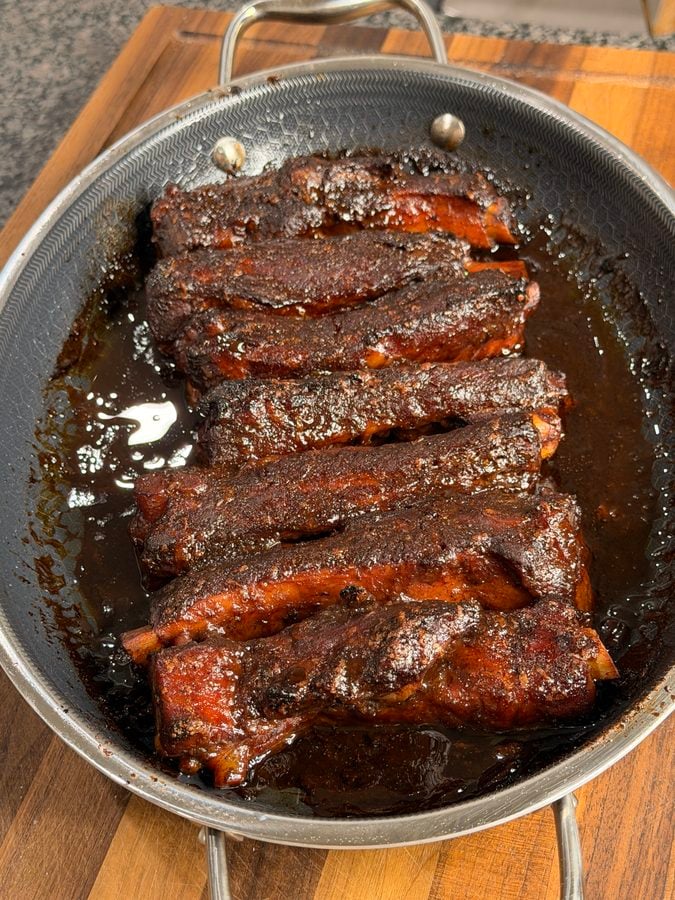
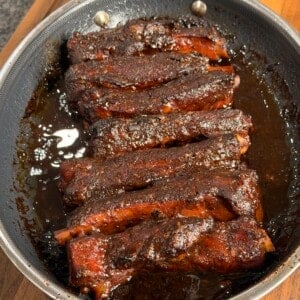
Tender pork ribs coated in a sweet, savory glaze, with glossy sauce and caramelized edges. These takeout-inspired ribs come together with a quick homemade sauce, then the oven does most of the work.
Sticky Chinese Takeout-Style Spare Ribs have everything I love about ordering ribs from Chinese takeout, tender meat, a sweet and savory glaze, and those sticky edges you find yourself picking at before you’ve even made a plate. I love the boneless version, but there’s something especially satisfying about eating a whole rib right off the bone.
This recipe started with a supermarket deal I could not walk away from. My grocery cart was already full, but I spotted a package of pork spare ribs at such a good price that I stood there staring at it for a solid five minutes. I didn’t have a plan for them yet, but apparently that wasn’t going to stop me.
I’m so happy I brought them home. The sauce takes just a few minutes to mix, the kitchen smells incredible while they cook, and the finished ribs are ridiculously delicious. I practically devoured them straight from the pan, but with rice and a crisp cucumber salad, you have a whole meal. And the leftovers? I honestly loved them just as much the next day.
Why You’ll Love Sticky Chinese Takeout-Style Spare Ribs
- Very little hands-on work. I mix the sauce, coat the ribs, and let the oven handle most of the cooking.
- Sweet, savory, and sticky. Hoisin, honey, and soy sauce give the ribs a glossy finish, while ginger and five-spice bring warmth and fragrance.
- No advance planning required. Marinating adds flavor, but I can make these the same day the ribs catch my eye at the supermarket.
- Extra sauce worth keeping. The pan juices make a delicious sauce for rice, so I’m happy this recipe makes a generous amount.
- Excellent leftovers. The ribs reheat beautifully with a little moisture, making them just as welcome the next day.
Ingredients
- Pork spare ribs: Cut into individual ribs so they’re easy to coat, turn, and glaze. I use bone-in ribs for this recipe.
- Hoisin sauce: The sweet, savory base of the sauce, with enough body to help the glaze cling to the meat.
- Soy sauce: Adds salt and balances the sweetness of the hoisin and honey.
- Honey: Gives the ribs their glossy, sticky finish.
- Brown sugar: Adds a little extra sweetness and helps develop those caramelized edges.
- Shaoxing wine or diluted rice vinegar: Shaoxing wine adds depth and is the traditional ingredient used here. I used a small amount of rice vinegar mixed with water because that’s what I had, and it still worked beautifully.
- Garlic: Grated or finely minced so it distributes evenly throughout the sauce.
- Fresh ginger: Adds a bright, warm flavor that balances the richer ingredients.
- Chinese five-spice powder: Brings the fragrant flavor that makes these ribs feel especially takeout-inspired.
- Water: Keeps the sauce from drying out during the covered bake.
- Scallions and sesame seeds: Optional finishing touches for freshness and a little texture.
How to Make Sticky Chinese Takeout-Style Spare Ribs
- Preheat the oven and prepare the ribs. Heat the oven to 325°F with a rack in the middle. Use a 9-by-13-inch metal baking pan or a small roasting pan with sides. Check the cut ends of the ribs for loose bone fragments, then pat the meat dry with paper towels.
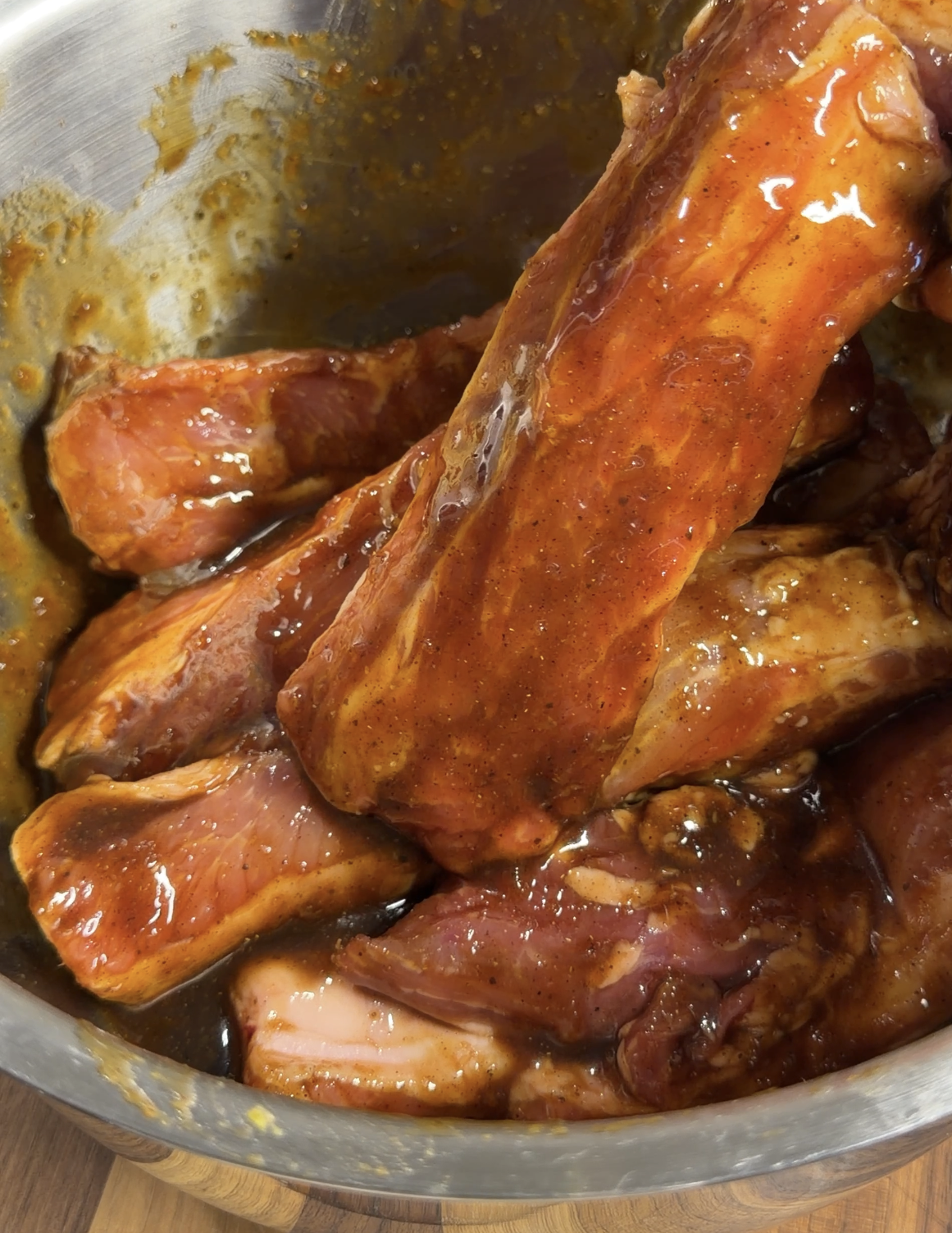
- Whisk together the sauce. Combine the hoisin, soy sauce, honey, brown sugar, Shaoxing wine or diluted rice vinegar, garlic, ginger, and five-spice. Before the sauce touches the raw pork, reserve ⅓ cup in a separate clean bowl for glazing later.
- Coat the ribs and cover the pan. Toss the ribs with the remaining sauce, then arrange them in the pan in a single layer. Pour any sauce left in the mixing bowl over the ribs and add the water around them. Cover tightly with foil, crimping it around the edges to trap the steam.
- Bake until the meat is tender. Bake covered for 1½–2 hours, turning the ribs halfway through and resealing the foil. Start checking at 1½ hours. A fork should slide easily into the thickest meat, and the meat should begin pulling back from the bones. If the ribs still feel firm, continue cooking covered, checking every 15 minutes.
- Uncover and brush with glaze. Remove the foil and increase the oven temperature to 450°F. If the ribs are sitting in a deep pool of liquid, spoon most of it into a heatproof bowl, leaving a thin layer in the pan. Brush the ribs generously with the reserved glaze.
- Caramelize the edges. Roast uncovered for 10–15 minutes, turning and brushing with more glaze halfway through. The sauce should look glossy and cling to the ribs. Watch closely toward the end, since the honey can burn. For extra char, broil briefly, checking every 30 seconds.
- Rest and serve. Let the ribs rest for 5 minutes, then finish with scallions and sesame seeds if you like. Serve with rice and a crisp cucumber salad, or enjoy them straight off the bone like I did.
Tips and Tricks
- Get them tender before glazing. The covered bake is where the meat softens. The hot finish caramelizes the sauce, so don’t move on to that stage while the ribs still feel tough.
- Seal the foil tightly. Holding in the steam keeps the ribs moist. If the pan looks dry when you turn them, add a small splash of water before covering again.
- Give the ribs room. Arrange them in a single layer so they cook evenly and are easy to turn. If your pan is too small, divide them between two pans and split the water between them.
- Use metal for the hot finish. A metal roasting pan can handle both stages. If you start in glass or ceramic, transfer the ribs to a foil-lined, rimmed metal sheet pan before finishing at high heat, especially if broiling.
- Reserve the glaze first. Set it aside before coating the raw ribs so you have a clean finishing sauce ready to go.
- Keep the pan sauce. Pour the cooked pan juices into a small saucepan, skim off excess fat, and simmer until slightly thickened. Taste as you go, since reducing it concentrates the saltiness. I love it spooned over rice.
- Skip additional salt. The hoisin and soy sauce already provide plenty.
Substitutions
- Rice vinegar for Shaoxing wine: I used 1 teaspoon rice vinegar mixed with 1 tablespoon water. It adds a little acidity rather than the same flavor as the wine, so don’t replace the wine with an equal amount of vinegar.
- Baby back ribs for spare ribs: These work with the same method, but they’re usually smaller and leaner. Start checking for tenderness earlier.
- Low-sodium soy sauce for regular soy sauce: This is a useful option if you prefer a slightly less salty sauce, especially if you plan to reduce the pan juices.
- Skip the garnishes: Scallions and sesame seeds are optional. The ribs have plenty of flavor on their own.
Leftovers
Refrigerate leftover ribs with their sauce in an airtight container for up to 3–4 days. Store any extra pan sauce separately if you have more than you need.
For reheating, place the ribs in a small baking dish with a splash of water and some sauce. Cover with foil and warm at 325°F until heated through. Uncover briefly at the end if you want to refresh the glaze.
The caramelized edges soften in the refrigerator, but the meat stays delicious. I prefer reheating gently so it doesn’t dry out.
For longer storage, freeze the ribs with their sauce for up to 2–3 months, then thaw in the refrigerator before reheating.
FAQ
No. I made these as a last-minute recipe, and they were delicious without an extended marinade. If you want to get ahead, refrigerate the coated ribs for 2 hours to overnight. Keep the reserved finishing glaze covered and refrigerated separately.
Rib thickness varies, so the timing is a guide. Keep them covered and continue cooking until a fork slides easily into the meat. Check every 15 minutes, adding a splash of water if the pan looks dry.
Too much liquid in the pan can keep the ribs from caramelizing. Spoon off most of the liquid before the hot finish, then brush with the reserved glaze. Keep the removed pan juices for serving.
I love rice to catch the extra sauce and a crisp cucumber salad to balance the richness. Steamed broccoli, sautéed bok choy, or green beans also make an easy side.
Sticky Chinese Takeout-Style Spare Ribs
Ingredients
- 2 pounds pork spare ribs, cut into individual ribs
- ⅓ cup hoisin sauce
- ¼ cup soy sauce
- ¼ cup honey
- 1 tablespoon brown sugar
- 2 tablespoons Shaoxing wine or 1 teaspoon rice vinegar mixed with 1 tablespoon water
- 2 garlic cloves, grated or finely minced
- 1 tablespoon grated fresh ginger
- 1 teaspoon Chinese five-spice powder
- ¼ cup water, for the baking pan
- Sliced scallions and sesame seeds, for serving, optional
Instructions
- Preheat and prepare. Heat the oven to 325°F with a rack in the middle. Use a 9-by-13-inch metal baking pan or a small roasting pan with sides. Check the ribs for loose bone fragments and pat dry.
- Make the sauce. Whisk together the hoisin, soy sauce, honey, brown sugar, Shaoxing wine or diluted rice vinegar, garlic, ginger, and five-spice. Reserve ⅓ cup in a separate clean bowl before adding the raw ribs.
- Coat and arrange. Toss the ribs with the remaining sauce. Arrange in a single layer in the pan and pour the remaining sauce from the mixing bowl over them. Add ¼ cup water around the ribs. Cover tightly with foil.
- Bake covered. Bake for 1½–2 hours, turning halfway through and resealing the foil. Begin checking at 1½ hours. The ribs are ready for glazing when a fork slides easily into the thickest meat. If needed, continue cooking covered, checking every 15 minutes.
- Uncover and glaze. Remove the foil and increase the oven temperature to 450°F. Spoon off most of any deep pool of liquid, reserving it for sauce. Brush the ribs generously with the reserved glaze.
- Finish uncovered. Roast for 10–15 minutes, turning and brushing with more glaze halfway through, until sticky and caramelized. Watch closely to prevent burning. For extra char, broil briefly, checking every 30 seconds.
- Rest and serve. Rest for 5 minutes. Garnish with scallions and sesame seeds if desired, and serve with rice and vegetables.